

Contact Lens Assessment
Recent clinical data indicates that 50% of lens wearers in Queensland struggle with dryness caused by our intense climate and air conditioning, yet only 15% of those patients realize a precision fit can resolve these issues. We understand that your eyes are unique, and a one size fits all approach simply doesn't work for our active Sunshine Coast community.
You likely agree that clear vision should never come at the cost of irritation or the fear of touching your eyes. Our promise is to help you discover how a comprehensive consultation ensures superior comfort, long term eye health, and vision perfectly tailored to your daily routine.
Beyond the Prescription: Why You Need a Dedicated Contact Lens Consultation in Maroochydore
Many patients assume their glasses prescription is a universal ticket to clear vision. It isn't. A contact lens sits directly on your ocular surface, while glasses typically rest about 12mm away from your face. This gap, known as vertex distance, significantly alters the effective power required for your vision. When you book Contact Lens Consultation at our Maroochydore practice, we perform specific calculations to translate your spectacle power into an accurate lens script.
A dedicated consultation also addresses the physical geometry of your eye. Every cornea has a unique shape, much like a fingerprint.
The Health Benefits of a Clinical Fitting
A professional fitting allows us to identify underlying issues like Dry Eye before they compromise your comfort. If your tear film is unstable, certain lens materials will feel uncomfortable by mid-afternoon. We analyze your tear quality to ensure the lens material is compatible with your specific eye chemistry. This clinical approach helps us establish a health baseline at our Maroochydore clinic, allowing us to monitor any changes in your eye health over time.
We take pride in being an independent practice, which means we aren't restricted to specific brands. Our focus remains entirely on finding the perfect technical fit for your eyes. This clinical freedom ensures that your prescription is tailored to your unique physiology rather than a corporate sales target.
The Science of a Precision Fit: Advanced Diagnostic Technology at Fitzpatrick Optometrists
At Fitzpatrick Optometrists, we believe a successful contact lens experience starts with a deep understanding of your eye's unique architecture. We don't guess; we measure. Our Contact Lens Consultations Maroochydore utilize Optos Ultra-wide Retinal Imaging to capture a 200-degree view of your retina in a single, comfortable scan. This allows our clinical team to confirm that the back of your eye is healthy enough to support lens wear before the fitting process even begins. We also employ slit-lamp biomicroscopy during every assessment. This high-powered microscope allows us to observe the lens-to-eye relationship in real-time, checking for proper movement and oxygen flow to ensure the material doesn't cause irritation or dryness.
Advanced Imaging for Long-term Safety
Safety is our priority, especially for those new to contact lenses or those wearing them for long hours. Optical Coherence Tomography (OCT) allows us to monitor your corneal health with incredible precision by detecting subtle changes in the corneal layers that are invisible during a standard exam. Optical Coherence Tomography technology provides a cross-sectional view of the cornea for safer contact lens wear. We insist on this comprehensive imaging for all new Maroochydore patients to establish a clear baseline of your ocular health. This proactive approach helps prevent complications before they start, ensuring your eyes remain vibrant and healthy for years to come.
As an independent practice, we have the freedom to select the best diagnostic tools and lens brands for your specific lifestyle without being tied to a single supplier. If you’re ready to see the difference that precision technology makes for your vision, you can view our available appointment times to start your journey with a team that cares about the details.
Your First Fitting: What to Expect During and After Your Consultation
Your journey toward clear, frame-free vision begins with a detailed lifestyle assessment. During Contact Lens Consultations Maroochydore at our practice, we spend the first 15 minutes discussing your daily routine. Whether you're surfing at Mooloolaba or spending 10 hours a day staring at digital screens in a Maroochydore office, these factors dictate the specific oxygen permeability and moisture content your eyes require. Our optometrists then perform a physical fitting, placing a diagnostic lens on your eye to evaluate its movement and centration. We use high-definition slit-lamp biomicroscopy to ensure the lens doesn't interact negatively with your eyelid or tear film. Comfort should be almost immediate; if it's not, we trial a different base curve or material right then and there.
The session is a dedicated 40-minute appointment where our Optometrists guide you through the mechanics of handling your lenses. We don't let you leave until you feel 100% confident in your ability to insert and remove them safely.
The Trial and Follow-up Process
We provide a trial supply because your home and work environments differ from our clinical setting. This trial period is vital to see how the lenses perform during a full day of activity. A follow-up appointment is helpful after this period. During this visit, we check for comfort and suitability. Our "Perfect Fit" guarantee for Maroochydore patients means that if the initial lens brand isn't providing 10/10 comfort, we'll trial alternative premium brands at no additional consultation cost until we achieve the ideal result.
Ready to experience the freedom of modern contact lenses? Book your professional fitting with our Maroochydore team today.
The Independent Advantage: Why Local Care Beats the Big Chains for Contact Lenses
Choosing where to book your Contact Lens Consultations Maroochydore involves more than just finding the lowest price on a box of lenses. Since 1988, Fitzpatrick Optometrists has operated as a family-owned practice, providing a level of continuity that corporate chains simply cannot match. When you visit us, you see the same practitioner who understands your clinical history, your previous lens trials, and your specific lifestyle needs. This long-term relationship, spanning almost 40 years for some of our local families, ensures your eye health is monitored with a consistent, expert eye.
Clinical freedom is the cornerstone of our independent status. Unlike many large optical franchises that are mandated by a corporate head office to prescribe specific "house brands" or high-margin products, we have the liberty to select from every lens manufacturer available in Australia. Whether you require the latest daily disposables from Alcon or Johnson & Johnson, or a highly specific custom-made lens from a boutique laboratory, our recommendations are based solely on what provides the clearest vision and the best physiological fit for your eyes.
We ensure that every fitting or aftercare appointment integrates seamlessly with your general eye test. This holistic approach means we aren't just looking at how a lens sits on your cornea, but also how it interacts with your tear film, your blink rate, and your overall retinal health. By keeping all your records under one roof , we provide a unified health journey that minimises errors and maximises comfort.
Convenient Local Support in Maroochydore
Local care provides a safety net that online warehouses and big-box retailers can't offer. If you experience sudden discomfort, a torn lens, or a suspected eye infection, our team is available for urgent assistance and clinical triage. Re-ordering your supply is straightforward with a quick phone call or a visit to the practice for local pickup. Being an independent practice allows Fitzpatrick Optometrists to prioritise patient health over sales targets by ensuring that every clinical decision is driven by your vision needs rather than a corporate bottom line.
Experience the Difference of Independent Eye Care on the Sunshine Coast
Your vision deserves more than a one-size-fits-all approach. Since 1988, Fitzpatrick Optometrists has served as a family-owned pillar of the community, providing clinical expertise that goes beyond the basics. We utilize advanced Optos and OCT diagnostic technology to map your eyes with incredible precision; this ensures your lenses provide all-day comfort even in the harsh Queensland sun. Our Contact Lens Consultations focus on your unique lifestyle, whether you're surfing at the beach or working in an air-conditioned office. It's about finding the perfect balance between modern science and personalized care. As an independent practice, we aren't tied to corporate quotas. We're dedicated to your long-term eye health and satisfaction. Don't settle for "good enough" when it comes to your sight. Our team is ready to guide you through every step of the fitting process with the warmth and professionalism you expect from a local expert.
Book Your Maroochydore Contact Lens Consultation Today
Frequently Asked Questions
Do I really need a separate consultation for contact lenses?
Yes, you need a specific consultation because a standard eye test only measures your vision, not the physical shape of your cornea. During Contact Lens Consultations, our independent team uses state-of-the-art technology to map your eye's surface. This ensures the lens sits correctly and maintains your eye health over the long term.
Can I get contact lenses if I have astigmatism or need multifocals?
You can definitely wear contact lenses with astigmatism or a need for multifocals.
Modern technology has eliminated the limitations that used to prevent people with complex prescriptions from enjoying lenses. Whether you're reading a menu or driving, we'll find a solution that fits your lifestyle and clinical needs perfectly.
How long does the contact lens fitting appointment take?
A standard contact lens fitting appointment takes between 45 and 60 minutes. This timeframe allows us to perform a thorough health check and teach you how to insert and remove your lenses safely. We don't rush this process because your confidence and comfort are our primary concerns.
During this, we also evaluate the lens fit on your eye using a slit-lamp microscope. This detailed inspection ensures the lens moves correctly and doesn't restrict oxygen flow to your cornea.
What happens if I find the trial lenses uncomfortable?
If your trial lenses feel uncomfortable, we'll work with youto find a better alternative. There are hundreds of lens materials and shapes available, so we simply adjust the prescription or the material until it feels right. Our goal as your local eye care partner is to ensure your Contact Lens Consultations lead to a perfect, irritation-free fit.
We believe that nobody should have to "put up" with lens discomfort. If the first pair isn't right, we use our clinical expertise to troubleshoot the issue and try a different technology that better suits your tear film.
Can I use my private health insurance for contact lens consultations?
You can use your private health insurance to claim a rebate on the cost of the contact lenses themselves. Most Australian funds like Bupa, HBF, or Medibank provide an annual optical limit under their "Extras" policies. While the consultation fee is often separate from the lens cost, you may receive a medicare rebate, we provide all the necessary item codes so you can maximize your benefits.
As an independent clinic, we help you navigate your private health insurance claims to ensure you get the best possible value. It's a proactive step toward maintaining your health while making use of the coverage you already pay for.
Tired, sore eyes?
How to Relieve Tired Eyes
At Fitzpatrick Optometrists, we believe your vision shouldn't be a source of constant discomfort. You deserve a solution that goes beyond temporary fixes or basic pharmacy drops. We've compiled professional techniques and specific local lifestyle adjustments to provide you with immediate relief and a clear routine for lasting comfort. You'll also learn to identify the specific clinical markers that indicate it's time for a comprehensive assessment at our independent practice.
What Are 'Tired Eyes' and Why Do They Happen?
Most of us recognize that heavy, gritty sensation that sets in after a long day of focus. While we commonly call this feeling tired eyes, it's often a physical manifestation of eye strain. To understand what is eye strain, we must look at the internal mechanics of the eye. It's a common condition where the eyes fatigue from intense use, rather than a permanent injury or disease. You'll likely notice symptoms like localized soreness, blurred vision, an increased sensitivity to light, and a persistent dry sensation that makes blinking feel uncomfortable.
The physiological cause lies with your ciliary muscles. These tiny muscles inside the eye are responsible for changing the shape of your lens to help you focus on objects at different distances. When you perform close-up tasks for hours, such as reading or using a digital device, these muscles stay in a state of constant contraction. Just like your legs would ache after a long hike, these muscles eventually tire. This overwork disrupts your eye's ability to maintain a sharp focus, leading to the discomfort many Maroochydore residents experience during their daily routines.
Common Symptoms
If you spend your workday in an office, you might notice a specific "heavy" feeling in your eyelids by 3:00 PM. This isn't just boredom; it's a sign your visual system is overtaxed. You may also find that your vision starts to blur or "ghost" when you're driving home along the Sunshine Motorway at dusk. This happens because your eyes are struggling to transition from the high-contrast light of a screen to the low-contrast environment of a twilight commute. Many of our patients also report dull tension headaches that settle right across the brow, which is a classic indicator that the muscles around your eyes are working too hard to compensate for visual stress.
The Difference Between Fatigue and Strain
It's vital to distinguish between systemic fatigue and localized eye strain. General fatigue is usually a whole-body issue, often resulting from getting less than the recommended 7 to 9 hours of sleep. In contrast, eye strain is specifically localized to the visual system. Asthenopia is the clinical term for eye strain caused by prolonged focus. While a good night's rest might solve general tiredness, true asthenopia often requires a change in how you work or a correction in your vision. If your tired eyes don't improve after a weekend away from the screen, it's often a signal that your current prescription is no longer accurate. At Fitzpatrick Optometrists, we use state-of-the-art technology to identify whether your discomfort is a simple case of muscle fatigue or a sign that you need a tailored lens solution to support your lifestyle.
The Impact of the Queensland Sun and Glare
In South East Queensland, the UV index frequently hits 11 or higher during the summer months. This intense light often triggers light sensitivity, known clinically as photophobia. When you walk along the white sands of Maroochydore Beach, the surface reflects up to 15% of UV radiation back at your eyes. This creates a "double dose" of exposure that forces the orbicularis oculi muscles to contract. Constant squinting to manage this glare leads to significant muscular fatigue by mid-afternoon. Polarized lenses are a vital tool for coastal living because they filter specific horizontal light waves, instantly relaxing these muscles. We also monitor the cumulative effect of blue light. While digital devices are a modern concern, the sun remains the largest source of high-energy visible light. Protecting your eyes outdoors is the first step in reducing that heavy, end-of-day sensation.
Indoor Climate and the Dry Eye Connection
The transition from the humid outdoors into the air-conditioned comfort of a local office provides relief from the heat, but it often compromises your tear film. Air conditioning systems typically reduce indoor humidity to approximately 20%, which is much lower than the 50% humidity our eyes require for comfort. This dry air accelerates tear evaporation, leaving the ocular surface vulnerable. When the tear film breaks down, the friction between your eyelid and the eye increases. This creates a gritty, heavy feeling that mimics the symptoms of eyestrain and general exhaustion.
If you spend more than 5 hours a day in a climate-controlled environment, your tired eyes are likely a sign of evaporative dry eye. You can learn more about managing these environmental factors in our comprehensive guide to relief for common eye complaints in Queensland. As an independent practice, we focus on your specific lifestyle needs to find a solution that works for your unique daily routine. If you find yourself rubbing your eyes by 3:00 PM, it's a sensible step to book an appointment so we can assess your tear film stability and provide personalized care.
How to Relieve Tired Eyes: A Step-by-Step Daily Routine
Managing eye comfort in our vibrant Maroochydore community requires more than just occasional rest. Between the bright Sunshine Coast glare and the demands of modern office work, your eyes work harder than you might realize. Implementing a structured routine helps mitigate the common causes of eyestrain and provides lasting relief from tired eyes.
Mastering the 20-20-20 Rule
This technique is the gold standard for preventing digital strain. It's a simple way to give your focusing muscles a necessary break throughout the day.
Step 1: Set a digital timer or use a desktop reminder app for every 20 minutes of near-work or screen time.
Step 2: Look at an object at least 6 metres (20 feet) away. This allows the ciliary muscle inside the eye to relax after being held in a tight focus.
Step 3: Maintain this distant focus for a full 20 seconds. This specific duration allows your eyes to fully reset and recalibrate.
Ergonomics for the Sunshine Coast Professional
Your physical workspace setup directly impacts your ocular health. We recommend positioning your monitor to avoid direct glare from office windows or the intense afternoon Queensland sun. Glare creates high-contrast reflections that force your eyes to work harder to see the text beneath. Keep your screen at an arm’s length, which is approximately 50 to 70 centimetres, to minimize accommodative demand. It's also vital that your screen sits slightly below eye level. This creates a downward gaze that ensures your eyelids cover more of the eye surface, reducing tear evaporation by roughly 30 percent.
Don't forget the importance of the 'Blink Break'. Research shows that people blink 60 percent less often when looking at screens. This leads to the gritty sensation often associated with tired eyes. Make a conscious effort to perform full, deep blinks every few minutes to spread a fresh layer of tears across the cornea.
At the end of your day in Maroochydore, use temperature therapy to recover. A warm compress applied for five minutes helps liquefy oils in the eyelids to improve tear quality. Alternatively, a cold compress can reduce puffiness and soothe inflammation. Finally, check your device settings. Your screen brightness should always match the ambient light levels in your room. If your phone or laptop is the brightest object in your home office, it's time to dim the backlight to protect your vision.
When 'Tired' Eyes Require Professional Intervention
Persistent fatigue isn't always a result of a late night or a long shift. If your eyes feel heavy even after a full eight hours of rest, your visual system is likely struggling with an underlying issue. We often see patients who mistake the symptoms of uncorrected astigmatism or presbyopia for simple exhaustion. In Australia, approximately 3.5 million people live with uncorrected refractive errors. These conditions force your eye muscles to work overtime to maintain focus, leading to the chronic sensation of tired eyes.
Specific "Red Flag" symptoms indicate it's time for a professional assessment. You should book an exam if you experience:
Frequent headaches or brow ache after using a computer.
Blurred vision that fluctuates throughout the day.
Sensitivity to glare from oncoming headlights or overhead office lights.
Double vision or difficulty tracking lines of text.
Sometimes the issue isn't clarity, but coordination. Binocular Vision Dysfunction (BVD) occurs when your eyes don't align perfectly as a team. Even a tiny misalignment forces the brain to compensate constantly, which drains your energy. Additionally, chronic tiredness is a primary symptom of Dry Eye Disease. Since 86% of dry eye cases involve blocked oil glands, your eyes feel gritty and fatigued because they lack the necessary lubrication to blink comfortably.
Advanced Diagnostics at Fitzpatrick Optometrists
We believe in seeing the full picture of your ocular health. Our Maroochydore clinic utilizes Optos ultra-wide retinal imaging to capture an 82% view of your retina in a single, high-resolution scan. This allows us to detect peripheral issues that traditional methods might overlook. We also prioritize OCT scanning for our patients. This technology provides a 3D cross-section of your eye tissues, measuring layers down to 5 microns to monitor for silent changes. You can learn more about this technology in our guide on Advanced Eye Health: What is an OCT Scan?
Beyond Blue Light Glasses
Many people reach for off-the-shelf blue light glasses, but these are rarely a complete solution for tired eyes. While they might reduce glare, they don't correct the muscle strain caused by digital proximity. We often recommend tailored anti-fatigue lenses. These specialized prescriptions include a "boost zone" at the bottom of the lens to support your eyes during close-up tasks. Choosing an independent optometrist means you receive a 30-minute comprehensive consultation, rather than the 15-minute "in-and-out" approach common in large corporate chains. This extra time ensures your lenses are customized to your exact working distance and lifestyle needs.
Don't settle for daily discomfort when a clear solution is available. Book your comprehensive eye exam at Fitzpatrick Optometrists to identify the root cause of your visual fatigue.
Personalised Eye Care at Fitzpatrick Optometrists Maroochydore
Fitzpatrick Optometrists has been a cornerstone of the Sunshine Coast community since 1988. For 35 years, we’ve operated as a family-owned practice, focusing on long-term patient relationships rather than quick transactions. Our Maroochydore clinic is equipped with state-of-the-art diagnostic technology, including Optical Coherence Tomography (OCT) scanning. This advanced imaging allows us to see beneath the surface of the retina, detecting potential issues long before they affect your sight. We believe that modern science works best when paired with traditional service values.
The independent difference is the foundation of our practice. Because we aren't tied to corporate shareholders or restrictive product lists, our optometrists have complete clinical freedom. We recommend lifestyle solutions and high-quality lenses based solely on what will improve your daily life. This autonomy ensures that if you are struggling with tired eyes after a long day at work, our advice is tailored to your specific visual environment and habits. We answer to our patients, not a head office.
Our Maroochydore Clinic Experience
You’ll find our practice conveniently located on the Corner of Second Avenue and the Esplanade in Cotton Tree, Maroochydore, making it an easy trip for residents in Maroochydore, Cotton Tree, and Alexandra Headland. When you arrive for a comprehensive consultation, you’re meeting a team of independent optometrists who truly understand the Sunshine Coast lifestyle. We don't just check your prescription; we look at the health of your entire visual system. Our appointments typically last 30 to 40 minutes, giving us ample time to discuss your concerns without feeling rushed. We’ve designed our clinic to be a welcoming space where complex eye health issues are explained in plain, accessible language.
Taking the Next Step for Your Vision
Maintaining your eye health should be as routine as a physical check-up. We suggest a proactive approach to vision care to ensure your eyes remain comfortable and clear as you age. Whether you are dealing with persistent tired eyes or it has been more than two years since your last exam, our team is ready to help. We offer bulk billing for eligible Medicare services, ensuring that professional eye care remains accessible to everyone in our local community. You can book your appointment by calling our Maroochydore office or using our simple online booking system.
Family-owned and locally operated since 1988.
Advanced OCT scanning and diagnostic tools.
Independent clinical advice with no corporate quotas.
Book Your Comprehensive Eye Test in Maroochydore today to experience the difference that personalised, independent care makes for your vision and comfort.
Frequently Asked Questions About Tired Eyes
What causes tired eyes even after a full night's sleep?
Persistent tired eyes often result from Digital Eye Strain or underlying binocular vision issues rather than just a lack of sleep. Research indicates that 50% of office workers suffer from these symptoms because their eye muscles work overtime to focus on pixels. If your fatigue remains after 8 hours of rest, it's likely your visual system is struggling with an uncorrected prescription or poor workplace ergonomics.
Can tired eyes cause blurry vision or headaches?
Yes, eye fatigue directly leads to tension headaches and intermittent blurring as your focusing muscles become exhausted. A study from the Vision Council found that 65% of adults experiencing digital strain report frequent headaches and neck pain. When the ciliary muscle inside your eye can't maintain a sharp focus, your brain works harder to compensate, which triggers these physical symptoms throughout your day.
How do I know if I need glasses or if my eyes are just tired?
You likely need a prescription if your vision remains blurry after taking a 20-minute break from your screen. Roughly 25% of Australians live with uncorrected vision problems that masquerade as simple fatigue. We use state-of-the-art technology to distinguish between temporary muscle exhaustion and permanent refractive errors. If you find yourself squinting at the Maroochydore road signs or leaning closer to your monitor, it's time for a professional assessment.
Are blue light glasses actually effective for eye strain?
Blue light lenses are effective at improving visual contrast and regulating your sleep cycles during evening screen use. While they don't replace a proper prescription, 60% of our patients report a reduction in glare-related discomfort when using them. These lenses work best as part of a tailored solution that includes proper lighting and the 20-20-20 rule. We often recommend them for Maroochydore locals who spend 6 or more hours daily on digital devices.
Does the Maroochydore climate make eye strain worse?
The Sunshine Coast climate significantly impacts eye comfort due to high UV levels and heavy air conditioning use. With the local UV index frequently hitting 11 or higher, your eyes face constant environmental stress that mimics the feeling of tired eyes. Additionally, the dry air from indoor cooling systems in Maroochydore offices evaporates your natural tear film 3 times faster than humid outdoor air, leading to gritty, fatigued sensations.
How often should I have an eye test if I work on a computer all day?
We recommend a comprehensive eye examination every 12 to 24 months for anyone spending over 5 hours a day on a computer. While Medicare generally covers a full test every 3 years for patients under 65, annual check-ups are vital for early detection of changes in your focusing ability. Our independent practice prioritizes your long-term health, ensuring your prescription stays current with your evolving digital lifestyle and workplace demands.
What are the best eye drops for tired, dry eyes in Queensland?
Preservative-free lubricant drops like Hylo-Fresh or Systane are the gold standard for managing dry sensations in our tropical climate. These formulations provide lasting relief without the irritation caused by the chemicals found in 40% of standard over-the-counter drops. Because Maroochydore's humidity often fluctuates, a lipid-based drop can help stabilize your tears. We'll help you select a specific product based on your tear film quality during your consultation.
Is eye strain a permanent condition or can it be cured?
Eye strain is rarely a permanent condition and 90% of cases improve with the correct clinical intervention. It's typically a functional issue that we resolve through personalized care, such as specialized computer lenses or vision therapy exercises. By addressing the root cause, whether it's an outdated prescription or poor lighting, we can restore your comfort. You don't have to accept visual fatigue as a normal part of your working life.
Advanced Eye Health: Optical Coherence Tomography (OCT)
Learn why Optical Coherence Tomography (OCT) is essential for your eye exam in Maroochydore. Our advanced 3D scans detect issues before you notice symptoms.
At Fitzpatrick Optometrists, we believe your peace of mind shouldn't depend on guesswork. That's why we've integrated Optical Coherence Tomography (OCT) into our comprehensive eye exams. This advanced 3D imaging allows us to see beneath the surface of your retina, capturing details that a standard digital photo simply can't reach.
You likely value your sight above almost any other sense, yet it's natural to feel overwhelmed by the different types of scans available today. We understand that you want the best possible care for your family without unnecessary complexity. In this guide, you'll discover how this technology provides a vital safety net for your long-term vision and why it's an essential tool for early disease detection here on the Sunshine Coast. We'll walk you through the simple process of a scan and show you how our independent clinical approach puts your health first.
Understanding Optical Coherence Tomography (OCT): The 3D View of Your Vision
Optical Coherence Tomography (OCT) represents a significant leap forward in how we protect your sight at our Maroochydore practice. This non-invasive imaging test uses light waves to take high-resolution, cross-section pictures of your retina. To understand its value, think of your retina like an onion; while older technology only lets us see the outer skin, an Optical Coherence Tomography (OCT) scan allows us to look "inside" the 10 distinct layers of tissue to see what's happening beneath the surface. It's the gold standard for modern optometry because it identifies issues long before they become visible during a physical exam.
We've invested in this technology because it offers our patients total peace of mind without any discomfort. The Optical Coherence Tomography (OCT) process is incredibly fast, typically taking only 5 to 10 seconds per eye. There is no radiation involved, and nothing ever touches your eye. You simply sit at the machine, look at a target light, and the system captures a detailed 3D map of your ocular health. It's a gentle, efficient process that provides us with the data needed to make informed decisions about your long-term vision care.
Optical Coherence Tomography (OCT) vs. Standard Retinal Photography: What is the Difference?
Many patients ask why they need an Optical Coherence Tomography (OCT) assessment if they've already had a retinal photo. We like to use the "iceberg" analogy to explain the difference. A standard retinal photograph captures the surface of the eye; it's the 10% of the iceberg visible above the water. While helpful for documenting freckles or surface bleeding, it can't see what's lurking underneath. Optical Coherence Tomography (OCT) reveals the 90% hidden below the surface architecture. By combining both images, we create the most comprehensive eye health record possible. This dual approach allows us to:
Identify fluid buildup between layers that a photo might miss.
Measure the exact thickness of the optic nerve.
Detect microscopic changes in the macula before symptoms appear.
The Technology Behind the Beam: How Optical Coherence Tomography (OCT) Maps Your Retina
The magic of this machine lies in a process called interferometry. In simple terms, the Optical Coherence Tomography (OCT) device sends a safe beam of near-infrared light into the eye. This light bounces back off the different layers of the retina, creating a "light echo" that the computer translates into a highly detailed map. The resolution is measured at the micron level, which is about 1/20th the width of a human hair. This precision is vital because it allows us to track changes as small as 5 microns over time. The light used is completely safe for all ages, from young children to seniors, ensuring a comfortable experience for every member of the Maroochydore community.
Detecting Silent Threats: Conditions Identified by OCT Imaging
Many vision-threatening conditions develop deep within the retinal layers where a standard surface examination cannot reach. Because the retina lacks pain receptors, you often won't feel anything is wrong until your sight is already compromised. We use Optical Coherence Tomography (OCT) to bypass this limitation, providing a high-definition view of your eye's internal architecture to catch issues long before they impact your daily life.
Glaucoma: Measuring the "Silent Thief of Sight"
Glaucoma is a leading cause of irreversible blindness, often progressing without a single symptom until nearly 40% of the optic nerve fibers are destroyed. This makes early detection vital for preserving your field of vision. Optical Coherence Tomography (OCT) tracks the thinning of the retinal nerve fiber layer over time to identify microscopic changes that precede permanent vision loss.
At our Maroochydore practice, we prioritize your long-term health by establishing baseline scans during your initial comprehensive exam. By comparing your results year-over-year, we can detect a loss of even 10 microns in nerve thickness. This level of precision allows us to initiate management strategies far earlier than traditional methods would permit.
Macular Health and the Queensland Lifestyle
Living on the Sunshine Coast means enjoying over 300 days of sunshine each year, but this high UV exposure can place significant stress on your macula. Age-Related Macular Degeneration (AMD) is a primary concern for residents over the age of 50, and OCT is the gold standard for monitoring this condition. The technology allows us to clearly distinguish between the two main types of the disease:
Dry AMD: We can identify small yellow deposits called drusen and monitor their growth to prevent progression.
Wet AMD: The scan reveals the presence of abnormal, leaking blood vessels that cause sudden vision decline.
Early detection of "wet" changes means we can refer you for treatments that save your central vision, ensuring you can continue to enjoy the vibrant Maroochydore lifestyle. If you haven't had your macula checked recently, you can book a comprehensive appointment with our independent team to ensure your eyes are protected.
Diabetic Retinopathy and Structural Concerns
For patients managing diabetes, OCT is an essential tool for identifying diabetic retinopathy. We use it to spot macular edema, which is a buildup of fluid that occurs when damaged blood vessels leak into the retina. Detecting this fluid before you notice blurriness can prevent permanent scarring.
Beyond systemic diseases, the scan is crucial for diagnosing mechanical issues like macular holes or vitreous traction. As we age, the gel inside the eye can pull away from the retina; OCT shows us exactly where this tension is occurring. This clarity helps us determine if a condition is stable or if it requires a surgical consultation to prevent a retinal tear.
What to Expect During Your OCT Scan
Experiencing an Optical Coherence Tomography (OCT) scan at Fitzpatrick Family Optometrists is a straightforward, painless process designed for your comfort. When you arrive at our clinic, we guide you to our state-of-the-art imaging suite. You'll sit comfortably at the machine and rest your chin and forehead against a stable support to ensure the highest image precision. You simply look at a target light for a few seconds while the machine captures cross-sectional images of your retina. The entire test typically takes less than 5 minutes to complete, making it easy to fit into a standard eye examination.
We've invested in technology that is non-invasive and requires no physical contact with your eye. In most cases, we can capture high-quality scans without the need for dilation drops. If your clinical situation requires a wider view of the peripheral retina, our optometrists might recommend drops to enlarge your pupils. If this happens, we'll explain why it's necessary for your specific eye health needs. One of the biggest advantages of this technology is that your results are available immediately, allowing us to discuss our findings with you during the same visit.
Preparing for Your Appointment
To help us provide the most accurate assessment, please bring your current prescription glasses and a list of any medications you take. Our clinic offers a comfortable, family-friendly environment where you can relax before your scan. Since the procedure is non-contact, you can usually drive yourself home immediately afterward. However, if dilation drops are used for your specific clinical case, your vision may be blurry for 2 to 4 hours, so you might prefer to have a driver accompany you or wait until the effects wear off.
Reviewing Your Results with the Optometrist
As an independent practice, we prioritize clear communication and clinical freedom. Your optometrist will sit with you to review the 3D images on a high-definition screen, pointing out the different layers of your retina. This visual approach helps demystify complex health markers and makes your eye health easier to understand. We store these digital records securely to compare them against future scans. This allows us to detect changes as small as a few microns over time. Our commitment to personalized care means we don't just look at a screen; we look at how these results impact your long-term vision and lifestyle.
Why Sunshine Coast Residents Benefit from Regular OCT Screening
Living in Maroochydore or Nambour means enjoying an active, outdoor lifestyle, but it also requires a higher level of vigilance for your eye health. The intense Queensland sun is more than just a cause of sunburn; it's a significant factor in retinal aging. With UV levels in our region frequently hitting 11 or higher on the index during summer, your eyes are under constant environmental stress. We view Optical Coherence Tomography (OCT) as a vital wellness tool that helps us monitor these changes before they impact your vision. It's about moving away from reactive care and toward a strategy of lifelong protection.
As we age, the risk of developing sight-threatening conditions increases. In Australia, approximately 1 in 11 people over the age of 65 show signs of Age-Related Macular Degeneration. By using advanced imaging, we can identify microscopic changes in the retinal layers that a standard physical exam might miss. This proactive approach ensures that residents in our local community can maintain their independence and continue enjoying the coastal lifestyle they love.
Family History and Genetic Risk Factors
If your parents or siblings have managed conditions like glaucoma or diabetes, your risk profile changes significantly. Glaucoma is often called the silent thief of sight because it presents no symptoms until permanent damage occurs. We recommend an annual Optical Coherence Tomography (OCT) scan for patients with these genetic markers. Early intervention is the most effective way to prevent vision loss, as 90% of blindness is preventable or treatable if caught early enough. We don't just see you for a one-off test; we act as a long-term partner in your family’s health journey, keeping a digital record of your retina to track even the smallest fluctuations over the years.
The Value of an Independent Practice View
Our status as an independent practice in Maroochydore gives us the clinical freedom to prioritize your health over corporate quotas. We've invested in state-of-the-art technology because it's the right thing for our patients, not because a head office told us to. This independence allows us to spend more time explaining your results compared to high-volume retail chains. We take a holistic view of your ocular health, which often includes providing relief for dry eye in Maroochydore as part of a broader treatment plan. You'll never feel rushed or like just another number in our chair.
Protect your vision with the precision it deserves. Book your comprehensive eye exam with OCT today.
Take the Next Step for Your Eye Health at Fitzpatrick Family Optometrists
Your vision is the primary way you experience the world, and protecting it requires more than a standard vision chart. We believe that Optical Coherence Tomography (OCT) is the most critical tool in our diagnostic kit because it allows us to see what lies beneath the surface. It isn't just a photograph; it's a high-definition cross-section of your retina that reveals health markers invisible to the naked eye. By identifying microscopic changes in the retinal layers, we can detect conditions like glaucoma or macular degeneration up to five years earlier than traditional methods. This proactive approach is why we've remained a trusted name in Queensland eye care for over 30 years.
We invite you to experience a unique blend of clinical authority and warm community reassurance. Our team doesn't just process appointments; we build long-term relationships centered on your overall well-being. We understand that medical scans can feel intimidating, so we take the time to demystify the technology. You'll receive a clear, plain-English explanation of your results, ensuring you leave our clinic feeling confident and informed about your eye health journey.
Booking Your Comprehensive Eye Exam
Maintaining a vibrant, active lifestyle starts with a clear view of the world. We've made the booking process straightforward so you can prioritize your health without the stress. You can use our simple online booking portal or call our friendly local team to find a time that suits your schedule. We've integrated Medicare and all major private health funds into our billing system to simplify the process for you. Most Optical Coherence Tomography (OCT) scans are non-invasive and take less than 10 minutes, yet they provide a lifetime of peace of mind. Don't wait for your vision to change before taking action. Book your eye test with OCT imaging in Maroochydore today and partner with a team that truly cares about your future.
Prioritise Your Long-Term Vision Today
Your eyesight deserves more than a standard checkup. Since 1988, Fitzpatrick Family Optometrists has operated as an independent practice dedicated to providing Maroochydore residents with clinical excellence. We've invested in state-of-the-art technology like Optos and Optical Coherence Tomography (OCT) because these tools identify hidden risks that traditional exams might miss. You'll benefit from a precise 3D analysis of your eye's internal structures, allowing for early intervention against sight-threatening conditions. Our team manages 4 convenient locations across Queensland, ensuring high-quality care is always within reach. We believe in building lasting relationships based on trust and thorough diagnostic results. Taking a proactive step now ensures your vision remains clear for all the milestones ahead. We're here to guide you through every stage of your eye health journey with expertise and genuine care.
Book Your Comprehensive Eye Test with OCT Imaging in Maroochydore
Diabetic Eye Assessments
Protect your vision with our guide to Diabetic Eye Assessments on the Sunshine Coast. Learn how our stress-free retinal imaging prevents blindness. Book today.
Did you know that 98% of serious vision loss caused by diabetes is entirely preventable through early detection? While that statistic from Vision 2020 Australia is reassuring, we know that living with diabetes often comes with a heavy side of health fatigue and genuine anxiety about the future of your sight. It's common to feel confused about whether a standard vision test is enough, or to worry that a clinical assessment will be invasive and uncomfortable.
At Fitzpatrick Optometrists, we believe your peace of mind is just as important as your prescription. When you book a Diabetic Eye Assessment, you aren't just getting a routine check; you're accessing a dedicated partnership focused on long-term wellness. We've designed this guide to show you how our Maroochydore clinic uses state-of-the-art retinal imaging to protect your eyes without the stress you might expect. You'll discover exactly how our independent, community-focused approach prioritizes your comfort while using precise technology to monitor for diabetic retinopathy. We will walk through the screening steps, explain the benefits of advanced scanning, and help you take a proactive step toward clear, lasting vision.
Why Diabetic Eye Assessments are Critical for Sunshine Coast Residents
A diabetic eye assessment is far more than a standard vision test for new glasses. It's a specialized clinical examination where we use advanced imaging to inspect the delicate internal structures of your eyes. For the 15,000 residents currently living with diabetes across the Sunshine Coast, these checks are the primary defense against preventable blindness. Many patients mistakenly believe that clear vision equals healthy eyes. However, diabetic eye disease is notoriously silent. You might have perfect sight while tiny leaks are already forming in your retina.
Early intervention is the most powerful tool we have. Clinical data indicates that 98% of serious vision loss from diabetes is entirely preventable through timely detection and management. At our Maroochydore clinic, we prioritize Diabetic Eye Assessments to catch these microscopic changes before they become permanent. Waiting for symptoms like "floaters" or sudden blurring often means the condition has already progressed to a stage where treatment is much more complex. By the time you notice a change in your sight, damage may have been occurring for months or years.
The Link Between Blood Sugar and Your Vision
High blood glucose levels don't just affect your energy; they physically alter the tiny blood vessels in your eyes. While temporary spikes can cause short-term blurring as the lens swells, chronic high sugar leads to Diabetic Retinopathy. This condition involves the weakening of vessel walls, leading to leaks or the growth of fragile new vessels that can bleed. We work closely with your GP and endocrinologist. This collaborative approach ensures your eye health data informs your broader diabetes management plan, creating a safety net for your sight.
Medicare and Diabetic Eye Care in Australia
Accessing high-quality clinical care shouldn't be a financial burden for our community. Medicare provides specific rebates for annual diabetic eye examinations, recognizing them as an essential health service for those managing type 1 or type 2 diabetes. As an independent practice, Fitzpatrick Optometrists focuses on providing comprehensive, unhurried care rather than meeting corporate quotas. Most patients are eligible for a comprehensive review every 12 months. We recommend scheduling your Diabetic Eye Assessment to coincide with your annual GP health cycle review. This ensures your care is synchronized and proactive.
Understanding Diabetic Retinopathy and Its Stages
Retinopathy occurs when high blood sugar levels damage the tiny blood vessels within your retina. In its earliest stages, these changes are often invisible to the naked eye. This is why waiting for vision loss to occur is the most significant mistake a patient can make. According to the National Eye Institute on Diabetic Retinopathy, early detection through regular exams can reduce the risk of severe vision loss by 95%. When you visit us for Diabetic Eye Assessments Sunshine Coast, we look for subtle signs that haven't yet impacted your sight.
Macular oedema is a specific complication where fluid builds up in the macula, the part of your eye responsible for sharp, central vision. This makes daily tasks like reading or identifying road signs while driving difficult. You might notice:
Dark or blurred patches in the center of your view.
Colors appearing faded or washed out.
New floaters or "cobwebs" drifting across your vision.
Sudden shadows that obscure parts of your sight.
The retina doesn't have pain receptors, so you won't feel the damage occurring. By the time symptoms appear, the disease has often progressed to a stage where treatment is more complex. Our role as your local eye care partner is to identify these risks before they change your lifestyle.
Advanced Technology: Optos and OCT in Diabetic Screening
Traditional retinal cameras have long been the standard in optometry, but they have a significant limitation. They generally capture only 45 degrees of the retina in a single image. This means your optometrist only sees about 15% of your eye's interior at once. At Fitzpatrick Optometrists, we believe your Diabetic Eye Assessment deserve a more thorough approach. We've invested in Optos ultra-widefield imaging to change the way we monitor your health. This technology captures a 200-degree view, revealing 82% of your retina in one high-resolution scan. Since early diabetic changes often appear in the far periphery of the eye, this 4x increase in visibility is a game-changer for early intervention.
Optos Ultra-wide Imaging Explained
Standard photography often misses the subtle hemorrhages or vessel leaks that hide in the outer edges of the retina. Our Optos system provides a comprehensive digital map that catches these peripheral changes before they progress. The process is incredibly patient-friendly. It's a fast, "no-touch" scan that's ideal for our Maroochydore patients who want clinical excellence without discomfort.
Speed and Comfort: The scan takes less than a second per eye.
Reduced Dilation: While drops are sometimes necessary, the advanced sensors in our Optos system often allow us to see through small pupils, reducing the need for dilating drops that cause hours of blurred vision.
Patient Education: We'll sit with you and review your scans on a large screen immediately. Seeing your own retinal health helps you understand your condition and the steps we're taking to protect your sight.
Personalised Care Beyond the Eye Test
We recognize that no two patients manage their diabetes in the same way. Our team tailors every assessment to your specific circumstances, including your age, your HbA1c history, and whether you manage Type 1 or Type 2 diabetes. We also provide dedicated support for concurrent conditions like dry eye, which affects approximately 50% of diabetic patients. To make your health management easier, we maintain a robust reminder system that alerts you when your annual check-up is due, taking the guesswork out of your preventative care routine.
Prioritise Your Vision for 2026 and Beyond
Protecting your sight starts with proactive care. Because diabetic retinopathy often shows no symptoms until vision loss occurs, regular screening is your best defense. Early detection through advanced Optos ultra-widefield imaging and OCT technology can prevent up to 90% of diabetes-related blindness. By choosing Fitzpatrick Family Optometrists, you're partnering with a family-owned independent practice that has served our community since 1988. We combine clinical expertise with a personalized approach to ensure your eyes remain healthy for the long term.
Our Maroochydore clinic is equipped with the latest diagnostic tools to provide comprehensive Diabetic Eye Assessment residents can rely on for accuracy and peace of mind. Don't wait for your vision to change before seeking professional help. Our expert clinical staff is here to guide you through every step of your eye health journey with clarity and care. We're committed to providing the detailed attention your eyes deserve in a comfortable, community-focused environment.
Book Your Diabetic Eye Assessment in Maroochydore Today and take a positive step toward securing your future vision.
Frequently Asked Questions
How often should I have a diabetic eye assessment?
You should have a comprehensive diabetic eye assessment at least once every 12 months. If our optometrists detect early signs of change, we may recommend reviews every 6 months to monitor your retina closely. Regular checks are vital because 98 percent of diabetes-related vision loss is preventable with early detection. These annual visits allow us to use our OCT scanning technology to track minute changes in your eye health over time.
Will my pupils be dilated during the diabetic eye exam?
Yes, we typically use medicated drops to dilate your pupils during a diabetic eye exam. This process takes about 15 to 20 minutes to work and allows our team to get a clear, wide-angle view of your retina and optic nerve. By widening the pupil, we can identify small hemorrhages or leaking vessels that might be hidden during a standard vision test. It's a gentle but necessary step for a thorough clinical evaluation.
Can I drive home after a diabetic eye assessment?
We recommend that you don't drive yourself home immediately after your appointment. The dilating drops usually cause blurred near vision and increased light sensitivity for 2 to 4 hours. Most patients arrange for a friend to drive them or use local transport on the Sunshine Coast. Bringing a pair of sunglasses will also help manage the glare as the drops gradually wear off and your pupils return to their normal size.
What is the difference between a normal eye test and a diabetic one?
A diabetic eye assessment goes beyond checking your prescription for glasses. While a normal test focuses on how well you see, a diabetic exam specifically evaluates the health of the blood vessels in your retina. We use advanced OCT scanning to create a 3D map of your macula, looking for swelling or fluid. Since 1 in 3 Australians with diabetes develop some form of retinopathy, these specialized medical checks are essential for long-term health.
Can diabetes cause permanent blindness if left untreated?
Untreated diabetes is a leading cause of preventable blindness in Australian adults. Conditions like proliferative retinopathy or macular edema can cause irreversible scarring and vision loss if they aren't managed. However, clinical data shows that 98 percent of serious vision loss can be avoided through early detection and timely treatment. By staying proactive with your check-ups, we can catch issues before they impact your daily life or independence.
Do I need a referral from my GP to see a Fitzpatrick optometrist?
You don't need a referral from your GP to see a Fitzpatrick optometrist. As an independent practice, we welcome all patients and can provide detailed reports back to your doctor or endocrinologist after your visit. We've built strong relationships with local Sunshine Coast GPs over many years to ensure your care is coordinated. You can simply call us or book online to start your journey toward better eye health today.
What happens if you find signs of retinopathy during my check-up?
If we find signs of retinopathy, we'll first grade the severity and explain the results using our digital imaging. For mild cases, we might increase your monitoring frequency to every 3 or 6 months. If the condition is advanced, we'll provide a direct referral to a trusted local ophthalmologist for specialized treatment. Our goal is to act as your supportive guide, ensuring you receive the right care at the right time.
Relief for Dry Eye in Maroochydore
Get lasting dry eye relief in Maroochydore. Our 2026 guide reveals advanced diagnostics & personalized treatments to restore comfort and clear vision.
We understand how exhausting it's to deal with constant grittiness or the frustration of contact lenses that just won't sit right. Recent clinical data suggests that nearly 20% of adults in our coastal community are currently managing some form of dry eye, yet many don't realize that standard over the counter drops often only mask the underlying issue.
Understanding Dry Eye in Maroochydore’s Coastal Climate
Living on the Sunshine Coast offers a lifestyle many envy, but our unique coastal environment presents specific challenges for your ocular health. At Fitzpatrick Optometrists, we frequently see patients struggling with Dry Eye Syndrome (DES), a condition where your tears cannot provide the necessary lubrication to keep the eye surface comfortable and clear. While it might feel like a minor annoyance, untreated dry eye can lead to inflammation and potential scarring of the cornea if the underlying causes aren't addressed by a professional.
It's vital to distinguish between temporary irritation and chronic disease. While a dusty day at the beach might cause a few hours of redness, chronic Dry Eye Disease (DED) is a persistent imbalance. Statistics from 2023 indicate that nearly 20% of adult Australians suffer from some form of chronic dry eye, making it one of the most common reasons for clinical visits in our independent practice.
How the Queensland Sun Affects Your Eyes
With the UV index regularly hitting 11 or higher during the summer months, the ocular surface is at risk of significant inflammation. This chronic exposure often leads to the development of pterygium, commonly known as surfer’s eye. This wedge-shaped growth doesn't just affect appearance; it creates an uneven surface that prevents tears from spreading evenly, directly contributing to dry eye symptoms. Whether you're at Cotton Tree or Maroochydore Beach, wearing wrap-around sunglasses that meet Australian Standard Category 3 is a non-negotiable step for long-term health.
Recognising the Early Warning Signs
Early intervention is the key to managing your comfort. Many of our patients describe a stinging or burning sensation that worsens as the day progresses. You might also experience light sensitivity or a gritty "foreign body" sensation, which feels exactly like a stray grain of sand is stuck under your eyelid. Dry Eye Syndrome is a multi-factorial disease of the ocular surface. If you notice your vision blurring intermittently or your eyes watering excessively, it's often a sign that your tear quality is poor, and your eyes are overcompensating with reflex tears that lack the necessary protective oils.
The Science of the Tear Film: Why Your Eyes Feel Gritty
Your eyes aren't just wet; they're protected by a sophisticated three-layer system. This tear film consists of mucus, water, and oil working in a precise harmony. The inner mucus layer anchors the tears to the eye, the middle aqueous layer provides hydration, and the outer lipid (oil) layer prevents evaporation. When these layers lose their balance, you experience that signature "gritty" sensation. It's a sign of dry eye, and it usually means your ocular shield is failing.
Meibomian Gland Dysfunction (MGD) is the leading cause of this discomfort. These tiny glands in your eyelids produce the essential oils needed for a stable tear film. If they become blocked or inflamed, which is often tied to a condition called blepharitis, your tears evaporate almost instantly. This leaves the sensitive surface of your eye exposed to the air. Having "poor quality" tears is often more frustrating than not producing enough tears because the irritation remains constant despite your eyes feeling watery.
Evaporative vs. Aqueous Deficient Dry Eye
Clinical data shows that 86% of patients suffering from this condition actually have issues with their oil glands rather than a simple lack of water. While aqueous deficiency can occur due to hormonal shifts or medications like antihistamines, the lipid layer's failure is the primary driver of most symptoms. Understanding this distinction is the first step toward lasting relief. For a broader look at how these symptoms manifest, you can explore this National Eye Institute guide to Dry Eye. If you're struggling with daily discomfort, we can help you identify the root cause with a tailored tear film assessment at our Maroochydore clinic.
The Role of Screen Time and Blinking
Modern lifestyle habits are significantly impacting our ocular health. Research indicates that we blink 60% less when focusing on digital screens. This is a major problem for Maroochydore professionals who spend eight hours a day on computers. Blinking is the mechanical "pump" that secretes oil from your glands. Without it, the oil becomes stagnant and thickens. We also see a rise in "incomplete blinking," where the eyelids fail to touch completely. This leaves the lower third of the eye chronically dry and inflamed.
Practice the 20-20-20 rule: every 20 minutes, look 20 feet away for 20 seconds.
Perform "purposeful blinking" exercises to ensure your eyelids meet fully.
Adjust your workstation so you're looking slightly downward, which reduces the eye's exposed surface area.
The Watery Eye Paradox: Common Myths and Misconceptions
It sounds like a contradiction. How can your eyes be dry if they won't stop watering? This confusion often prevents patients in Maroochydore from seeking the right care. At Fitzpatrick Optometrists, we see many people who've spent months "waiting out" what they think is an allergy, only to find their dry eye has progressed. Understanding the mechanics of your tears is the first step toward lasting comfort.
Why Watery Eyes Are Often a Sign of Dryness
Your eyes produce two distinct types of tears. Basal tears are the steady, lubricating film that protects your vision every second of the day. Reflex tears are the watery flood that happens when you're peeling onions or get dust in your eye. When your basal tear film is poor quality, your brain detects the resulting irritation and sends a frantic signal to the lacrimal glands. This results in a surge of reflex tears. Because these tears lack the essential oils produced by your meibomian glands, they can't stick to the eye. Instead, they simply pour down your cheeks, leaving the ocular surface just as parched as before. Clinically, we call this overflow "epiphora," and it's a primary symptom of Meibomian Gland Dysfunction (MGD), which accounts for 86% of dry eye cases according to clinical data from 2025.
The Danger of Over-the-Counter 'Redness Relievers'
It's tempting to reach for a generic bottle of "redness relief" at the chemist. However, these products often act as a temporary mask rather than a solution. Many contain vasoconstrictors that narrow the blood vessels in your eyes. When the effect wears off, the vessels often swell larger than before, creating a "rebound redness" cycle that can worsen your condition. For a sustainable recovery, a professional Dry Eye diagnosis and treatment plan is essential. We focus on preservative-free formulations because common additives like Benzalkonium Chloride can actually irritate a sensitive ocular surface. Choosing a professional assessment saves you from the "trial and error" expense of pharmacy products, which 2026 cost-of-living data shows can be 40% more expensive over a year than a targeted, clinical treatment plan.
Another common misconception is that gritty, tired eyes are an unavoidable part of getting older. While it's true that tear production can shift as we age, it isn't a life sentence. We've helped patients in their 70s and 80s regain clear, comfortable vision by using state-of-the-art diagnostic tools to identify the specific cause of their discomfort. You don't have to just "live with it." As an independent practice, we have the freedom to recommend the best technology and lifestyle adjustments tailored specifically for your needs. Don't let dry eye myths dictate your comfort; professional help is closer than you think.
Practical Relief: Home Care vs. Clinical Solutions
Managing the daily discomfort of digital eye strain starts with the 20-20-20 rule. Every 20 minutes, you should look at an object 6 metres (20 feet) away for at least 20 seconds. This brief pause allows your focusing muscles to relax and encourages a natural blink rate, which often drops by 60% during intensive screen work. It's a simple, cost-free habit that provides immediate relief for tired eyes.
Nutrition also plays a vital role in tear film stability. Incorporating Omega-3 fatty acids into your diet helps improve the oil quality produced by your Meibomian glands. Clinical data suggests that a daily intake of 1,000mg of EPA and DHA can lead to a 20% increase in tear break-up time within 90 days. We often recommend high-quality supplements to support this internal hydration.
Effective Home Management Strategies
Consistency is the secret to successful home care. If you struggle with blepharitis, using pH-balanced lid wipes twice daily removes debris and bacteria that irritate the eye surface. Environmental control is equally important; keeping indoor humidity levels around 45% prevents excessive tear evaporation. For outdoor protection, wrap-around shield sunglasses are essential to block the drying effects of the Maroochydore sea breeze. To effectively liquefy hardened oils within the Meibomian glands, a warm eye compress should maintain a consistent temperature between 40°C and 45°C for at least 10 minutes.
In-Clinic Treatments Available in Maroochydore
When home remedies don't provide the relief you need, our professional clinical interventions offer a deeper level of care. We perform specialized lid debridement and expression to physically clear obstructions from the glands, a process that provides more lasting results than heat alone. Our independent status allows us to prescribe a wide range of therapeutic lubricants and prescription anti-inflammatory drops without corporate restrictions. At Fitzpatrick Family Optometrists, we use state-of-the-art diagnostic tools to tailor your treatment plan specifically to your lifestyle and the unique severity of your dry eye symptoms.
If your dry eye symptoms persist for more than two weeks despite home care, it's time to seek a professional assessment. Chronic redness, a gritty sensation, or blurred vision that clears with blinking are clear signs that your tear film needs expert attention. We're here to help you regain comfort and clarity with a personalized strategy.
Ready to find lasting comfort? Book your comprehensive dry eye assessment with our experienced team today.
Take Control of Your Eye Comfort Today
Living on the Sunshine Coast means your vision faces unique environmental challenges from our salt-laden air and coastal winds. While home remedies offer temporary comfort, long-term relief requires a scientific approach to your tear film health. At Fitzpatrick Family Optometrists, we've served the Maroochydore community as a family-owned independent practice since 1988. We combine this 35-year heritage with state-of-the-art diagnostic tools like OCT and Optos imaging to identify the precise root cause of your symptoms.
Whether you're dealing with the watery eye paradox or persistent grittiness, our local experts provide the clinical authority needed to restore your clarity. Don't let dry eye dictate your lifestyle. Your path to clearer, more comfortable vision starts with a personalised management plan designed specifically for your eyes and our unique local climate. We're here to ensure your vision remains sharp for the long term.
Book Your Comprehensive Dry Eye Assessment in Maroochydore
Frequently Asked Questions
Why are my eyes so dry and watery at the same time?
Your eyes produce excess watery tears as a reflex response because the underlying tear film is unstable or evaporating too quickly. This happens when the lipid layer, produced by your eyelids, isn't thick enough to keep moisture in place. Our clinical experience shows that 86% of patients with dry eye symptoms actually suffer from evaporative issues rather than a lack of water production. We use state-of-the-art technology to measure your tear breakup time and determine the exact cause.
Can dry eye cause blurred vision or light sensitivity?
An unstable tear film often creates an irregular surface on your cornea, which scatters light and causes intermittent blurring. This roughness makes your eyes more sensitive to the bright Sunshine Coast sun, especially during the 10 am to 2 pm peak UV period. Research published in the Journal of Clinical Medicine in 2021 indicates that 75% of patients experience these visual fluctuations. We provide personalized care to smooth your tear film and restore clarity.
Can I still wear contact lenses if I have dry eye syndrome?
You can definitely continue wearing contact lenses by switching to daily disposables or specialized materials like silicone hydrogel. Approximately 50% of contact lens wearers report dryness, but modern lens technologies have improved moisture retention by 30% compared to older hydrogel models. As an independent practice, we have the freedom to source the best lens brands for your comfort. Book an appointment to trial the latest moisture-rich lens options specifically designed for sensitive eyes.
Ortho-K in Maroochydore: A Clear Alternative to Glasses
Seeking ortho k in Maroochydore? Get clear vision all day without glasses or surgery. Our overnight lenses offer a safe, reversible alternative to LASIK.
What is Ortho-K? Understanding Corneal Reshaping in Maroochydore
Orthokeratology, or ortho k, provides a sophisticated, non-surgical way to correct your vision while you sleep. At Fitzpatrick Optometrists, we often describe these custom-designed lenses as "night-time retainers" for the eyes. Unlike laser surgery, this process requires no incisions and is 100% reversible. If you stop wearing the lenses, your cornea simply returns to its original shape within 72 hours. This makes it an ideal choice for Maroochydore families seeking a flexible alternative to daily glasses or daytime contact lenses.
The process is straightforward but remarkably effective. You place the lenses in before bed, sleep through the night, and remove them upon waking. Because the lenses have reshaped the front surface of your eye overnight, you enjoy clear, natural vision all day without needing any visual aids. It's a lifestyle-changing solution that fits seamlessly into a busy Sunshine Coast routine.
The Technology Behind the Lens
We utilize advanced corneal topography to create a digital map of your eye's surface, measuring over 10,000 individual points. This data allows our clinical team to prescribe Rigid Gas Permeable (RGP) lenses tailored to your unique ocular anatomy. These high-oxygen materials allow your eyes to breathe naturally throughout the night. As you sleep, the lens gently flattens the central cornea by less than the width of a human hair. This subtle shift redirects light correctly onto the retina, providing clear vision the moment you wake up.
Who is a Candidate for Ortho-K?
This treatment is particularly effective for patients with myopia (short-sightedness) up to -6.00 dioptres and mild astigmatism. For school-aged children, ortho k is a gold standard for myopia control. Clinical studies have shown it can slow the progression of short-sightedness by 40% to 60%, which is vital for long-term eye health. It's also a liberating option for active adults. If you spend your weekends surfing at Maroochydore Beach or cycling along the coast, you'll appreciate the freedom from dusty or dry daytime contacts. Common candidates include:
School-aged children: Especially those showing rapid increases in their prescription each year.
Athletes and Swimmers: Those who find glasses restrictive or traditional contacts a hygiene risk in the water.
Dry Eye Sufferers: Adults who struggle with the discomfort of daytime contact lenses in air-conditioned offices.
As an independent practice, we take the time to ensure your eyes are perfectly suited for this technology. We focus on your long-term ocular health, providing a tailored approach that larger optical chains often overlook. Choosing this path means partnering with a local expert who understands both the science of your vision and the demands of your lifestyle.
The Science of Myopia Control: Why Ortho-K is More Than Just a Lens
The World Health Organization reports that myopia rates are surging globally, with projections showing 50% of the population will be myopic by 2050. This isn't just a minor inconvenience for Sunshine Coast school children. It's a physiological change that requires early intervention. At Fitzpatrick Family Optometrists, we focus on the underlying cause: the excessive lengthening of the eyeball. Our clinical team views myopia not as a simple prescription to be filled, but as a condition to be managed proactively to protect a child's future sight.
Slowing Down Myopia Progression
Standard single-vision lenses provide clear sight, but they can unintentionally encourage the eye to grow longer. In contrast, ortho k uses a specialised lens design to create peripheral defocus. This optical effect sends a signal to the brain to slow down the eye's growth rate. Clinical trials, including the ROMIO study, have shown that orthokeratology reduces axial length elongation by approximately 43% to 63% compared to children wearing glasses. Axial length is the physical measurement from the front to the back of the eye, and it's the most accurate metric for predicting future eye health.
Peripheral Defocus: Shifting how light hits the outer edges of the retina to discourage eye elongation.
Prescription Stability: Reducing the frequency and severity of prescription changes as children grow.
Non-Surgical: Achieving these results without the need for invasive procedures or daytime contact lenses.
A Proactive Approach for Sunshine Coast Families
Our Maroochydore practice rejects the old "wait and see" method. We use advanced diagnostic tools like Optos ultra-widefield retinal imaging and OCT scans to track eye health from the very first visit. By managing myopia early, we significantly lower the lifetime risk of sight-threatening issues. A 2019 study published in Investigative Ophthalmology & Visual Science found that high myopia increases the risk of retinal detachment by a factor of 10. Reducing a child's final prescription by just one dioptre can lower their risk of myopic macular degeneration by 40%.
Being an independent practice allows us the clinical freedom to recommend these proactive treatments based purely on what's best for your child's long-term vision. If you're concerned about your child's changing prescription, you can book an assessment with our clinical team to discuss a tailored management plan. Our goal is to provide a clear path forward that balances modern science with the gentle, personalised care our community expects.
Ortho-K vs. Traditional Vision Correction: A Comprehensive Comparison
Choosing the right vision correction involves weighing lifestyle needs against long-term eye health. While glasses remain a reliable standard, they often restrict active residents in Maroochydore who enjoy surfing at Cotton Tree or hiking through Buderim. Unlike glasses, ortho k provides a lens-free experience during your waking hours. This approach is entirely reversible. If a patient stops wearing the lenses, their cornea returns to its original shape within days. This flexibility is a significant advantage over permanent surgical alterations.
From a financial perspective, the initial investment in orthokeratology covers the specialized fitting process and the custom-designed lenses. While the upfront cost might range from A$1,500 to A$2,500 depending on the complexity of the prescription, it compares favorably to the recurring costs of daily disposable contact lenses. High-quality daily disposables can cost a patient between A$800 and A$1,200 every year. Because ortho k lenses typically last 12 to 24 months with proper care, the long-term expense often stabilizes, making it a sustainable choice for many families.
Ortho-K vs. Laser Eye Surgery (LASIK)
Safety and age are the primary differentiators here. LASIK is a permanent surgical procedure that requires a stable prescription and is generally reserved for adults over age 21. We can begin fitting children for Ortho-K as young as age 7, providing them with clear vision during their most active years. There is no surgical recovery time or risk of post-operative infection. You simply sleep in the lenses and wake up with clear sight, avoiding the "gritty" sensation often reported during laser healing phases.
Ortho-K vs. Daytime Contact Lenses
Many patients visit our independent practice because they struggle with dry eyes. Research indicates that up to 50% of daytime contact lens wearers experience discomfort or dryness by the end of the work day. Ortho-K eliminates this issue because you don't wear a lens when you're awake. It also removes the risk of losing a lens at school or while swimming. You won't have to worry about dust or wind-borne sand at the beach irritating your eyes, as there is no physical lens present to trap particles against the corneal surface.
Is Ortho-K Right for Your Sunshine Coast Lifestyle?
Living in Maroochydore means spending significant time outdoors. Whether you're catching waves at the mouth of the Maroochy River or playing a weekend game of footy at the local sports complex, traditional eyewear often falls short. Glasses smudge with salt spray, and standard contact lenses can trap abrasive sand against your cornea. By wearing ortho k lenses while you sleep, you eliminate these daily frustrations. It's a practical solution for active locals who want to enjoy our coastal environment without the physical barriers of frames or daytime lenses.
The coastal wind on the Sunshine Coast often reaches speeds over 25 knots during the summer months. For traditional contact lens wearers, this frequently leads to "Dry Eye" symptoms as the wind evaporates the tear film. Because you don't wear lenses during the day with this treatment, your eyes stay naturally hydrated, even during a windy afternoon at the beach. We find that patients who previously struggled with lens discomfort in our climate report a 100% reduction in wind-related irritation once they switch to overnight reshaping.
Water Sports and Outdoor Freedom
Swimmers and surfers at Maroochydore Beach benefit most from the "Surfer's Advantage." You won't risk losing a contact lens in the surf or struggle with blurry vision while paddling out for a set. Sand is a constant reality here. If a single grain gets behind a daytime contact lens, it causes immediate pain and potential corneal abrasions. Choosing ortho k means you wake up with 20/20 vision, leave your lenses on the bedside table, and head straight to the water without a second thought.
Practicality for Busy QLD Families
For parents, managing a child's vision can be a logistical challenge. Statistics from a 2022 Optometry Australia report suggest that myopia rates are rising, yet active kids and glasses are often a poor match. We see many local families who are tired of replacing broken frames after a rough game of netball or nippers.
Complete Supervision: Parents oversee the cleaning and application of lenses at home in the evening, ensuring 100% hygiene compliance.
Unrestricted Play: Children feel a renewed sense of confidence when they can run, jump, and dive without worrying about their spectacles falling off or breaking.
Cost Efficiency: While the initial fitting requires an investment, you avoid the recurring costs of replacing damaged or lost glasses throughout the school year.
If you want to experience the freedom of clear vision without daytime lenses, book a lifestyle assessment with our independent team today.
Starting Your Ortho-K Journey at Fitzpatrick Family Optometrists
Embarking on a journey toward clear vision without surgery is a structured and rewarding process. At Fitzpatrick Family Optometrists, we've refined our approach to ensure your transition to ortho k is seamless, safe, and tailored specifically to your ocular anatomy. As an independent practice, we aren't restricted by corporate lens contracts; we have the clinical freedom to select the most advanced designs available for your eyes.
Step 1: The Comprehensive Eye Examination. Whether you visit our Maroochydore or Nambour clinic, we begin with a deep dive into your ocular health. We assess your prescription and ensure your tear film and eye surface are healthy enough for overnight lens wear.
Step 2: Digital Corneal Mapping. We use state-of-the-art topography to capture over 22,000 data points on your cornea. This creates a detailed 3D "map" of your eye surface, which is essential for a precise fit.
Step 3: Custom Lens Design. Your data is used to manufacture bespoke lenses. During the initial fitting consultation, we'll teach you how to apply and remove the lenses safely.
Step 4: First Trial and Follow-Up. You'll wear the lenses for your first night at home. We'll see you the following morning to monitor the initial change and schedule regular check-ups over the first six months to ensure optimal results.
Our Advanced Diagnostic Technology
Precision is the cornerstone of successful orthokeratology. We invest in high-resolution Optos imaging and OCT scanning to monitor your eye health at a cellular level throughout your treatment. These tools allow us to detect subtle changes in the retina or corneal thickness that standard equipment might miss. By combining this technology with our status as an independent practice, we offer a wider range of custom lens designs than many large optical chains, ensuring your lenses provide maximum comfort and the sharpest possible vision.
Booking Your Assessment in Maroochydore
If you're tired of the daily hassle of contact lenses or the weight of glasses, it's time to see if you're a candidate for this life-changing technology. Our Maroochydore clinic is conveniently located on Aerodrome Rd with easy, on-site parking for Sunshine Coast residents. We take the time to answer every question, ensuring you feel confident and informed before you begin. Take the first step toward waking up with 20/20 vision.
Book your Ortho-K consultation at Fitzpatrick Family Optometrists today
Embrace a Life Without Visual Limits
Choosing ortho k means more than just leaving your glasses on the bedside table. It's a clinically proven method to manage myopia and reclaim your active Sunshine Coast lifestyle, whether you're surfing at Mooloolaba or cycling along the esplanade. By gently reshaping your cornea while you sleep, these lenses provide crisp, natural vision all day long without the need for invasive surgery.
At Fitzpatrick Family Optometrists, we've provided independent clinical expertise to our local community since 1989. Our family-owned practice combines over three decades of experience with state-of-the-art tools, including Optos ultra-widefield imaging and OCT diagnostic technology, to create a personalized treatment plan for your unique eyes. We don't just look at your prescription; we prioritize your long-term ocular health through every stage of your journey.
Ready to see the difference that tailored, local care makes? Book Your Ortho-K Assessment in Maroochydore today. We look forward to helping you see your world with newfound clarity and confidence.
Frequently Asked Questions
Is Ortho-K safe for children to use?
Yes, ortho k is a safe and non-surgical option for children, often used as a primary method for myopia control. Research in the British Journal of Ophthalmology shows these lenses can slow the progression of short-sightedness by up to 45% in young patients. At Fitzpatrick Optometrists, we've successfully fitted children as young as 7 to help them enjoy active lifestyles and sports without the need for daytime glasses.
How long does it take for Ortho-K to work and provide clear vision?
Most patients see a significant improvement in their vision within 2 to 3 days of starting the treatment. While you'll notice a change after the very first night, it typically takes 7 to 14 days of consistent wear to reach your full visual potential. We'll schedule follow-up appointments at our Maroochydore clinic during this first fortnight to monitor your progress and ensure your eyes are responding correctly.
Does Ortho-K hurt when you put the lenses in?
You won't feel pain, though you'll likely experience a slight lens awareness when you first apply them. This sensation usually fades within 60 seconds as your eyes adjust to the presence of the lens. Because you wear these custom lenses while you sleep, your eyelids stay closed, which eliminates friction. Most of our patients find they don't even notice the lenses after the first 4 nights of use.
What happens if I stop wearing my Ortho-K lenses for a night?
Your vision will slowly begin to return to its original prescription if you skip a night of wear. Ortho-K is a temporary reshaping process, and the clear effects generally last for about 16 to 18 hours of waking time. If you miss one night, your vision might be slightly blurred by the following afternoon. After 72 hours without wearing the lenses, your corneas will typically return to their pre-treatment shape.
Can I swim or surf while wearing Ortho-K lenses?
You don't wear the lenses while you're in the water; instead, you enjoy clear vision because the lenses reshaped your eyes overnight. This is a fantastic benefit for Sunshine Coast locals who want to surf at Mooloolaba or swim in Maroochydore without worrying about losing a contact lens. By not wearing lenses in the water, you also remove the risk of serious infections like Acanthamoeba keratitis that can occur with traditional contacts.
Is Ortho-K more expensive than wearing regular glasses?
The initial investment for ortho k is higher than a standard pair of glasses, typically ranging from A$1,500 to A$2,500 for the first year. This fee covers your custom-designed lenses, detailed corneal mapping, and all necessary follow-up consultations. When you calculate the cost over the 2-year lifespan of the lenses, it works out to roughly A$2.50 per day. This is quite comparable to the ongoing cost of premium daily disposable contact lenses.
Can Ortho-K fix astigmatism as well as short-sightedness?
Yes, modern lens designs can effectively correct astigmatism up to approximately 1.50 or 2.00 dioptres. While many people associate the treatment with myopia, our advanced topography technology allows us to create bespoke lenses for more complex eye shapes. We've helped numerous patients with moderate astigmatism achieve 20/20 vision. We'll confirm your suitability during a 60-minute initial assessment where we map the unique contours of your eyes.
How often do I need to replace my Ortho-K lenses?
You should replace your lenses every 12 to 18 months to ensure they continue to provide the best possible vision and eye health. Over time, microscopic deposits can accumulate on the lens material even with diligent daily cleaning. Replacing them on this schedule ensures the lenses remain breathable and maintain their precise shape. As an independent practice, we'll provide a tailored care plan to help you track your lens age and maintain peak performance.
Safety Glasses in Maroochydore: The Complete Guide to Certified Eye Protection
Tired of foggy safety glasses in Maroochydore? Our guide helps you choose certified, comfortable eyewear that meets AS/NZS 1337.1 for ultimate protection.
You deserve eyewear that offers clinical-grade clarity without sacrificing the heavy-duty protection required by Australian law. We'll help you select certified safety glasses that meet AS/NZS 1337.1 standards while ensuring they remain comfortable for a full eight-hour shift. This guide explains the critical differences between medium and high impact ratings and shows you how a professional fitting at our independent practice can prevent the 60% of workplace eye injuries that occur due to ill-fitting equipment. Let's find the personalized solution that keeps your vision sharp and your site compliance perfect.
Understanding Safety Glasses: Why Your Vision Needs Professional Protection
Your eyes are your most valuable tools on the job. While many people think any pair of spectacles provides a shield, true safety glasses are engineered to survive impacts that would destroy standard eyewear. At Fitzpatrick Optometrists, our clinical experience shows how certified protection prevents life-altering trauma. A certified product meets rigorous Australian Standards (AS/NZS 1337.1), whereas eyewear safety as a general concept lacks the testing required for high-risk environments.
Why Standard Sunglasses Are Not Safety Glasses
Standard sunnies lack the reinforced frame retention systems found in professional safety glasses. If a heavy object hits a fashion lens, the frame often fails, allowing the lens to be pushed directly into the eye socket. Standard lenses are typically only 2mm thick and can shatter into sharp shards upon impact, causing secondary penetration injuries. Safety lenses must meet a specific shatter-resistance requirement where they withstand the impact of a 6.35mm steel ball travelling at 45 metres per second without cracking or dislodging.
The Cost of Inadequate Eye Protection
Safe Work Australia reports that approximately 50,000 eye injuries occur annually across the country, with 90 percent of these being preventable. A minor corneal abrasion might seem like a temporary nuisance, but it often leads to permanent scarring or recurrent erosions that degrade your long-term visual acuity. When your vision is compromised, your spatial awareness and reaction times drop, increasing the risk of other workplace accidents. We believe that clear, protected vision is the foundation of your professional performance and personal well-being.
Australian Standards (AS/NZS 1337.1): The Benchmark for Eyewear Safety
Choosing the right safety glasses starts with looking for the AS/NZS 1337.1 certification. This Australian and New Zealand standard isn't just a suggestion; it's a rigorous set of requirements that ensures your eyewear survives the rigours of a Maroochydore construction site or workshop. You can verify compliance by checking for the manufacturer's mark and the "1337" stamp etched directly onto the lens and the inside of the frame arm. If these markings are missing, the glasses don't meet the legal requirements for Australian workplaces.
Certified lenses undergo punishing stress tests to guarantee performance. For medium impact certification, a 6.35mm steel ball is fired at the lens at a speed of 45 metres per second. The lens must not shatter, crack, or even touch the eye area during this impact. Many non-certified imports from overseas marketplaces bypass these tests entirely. Using non-compliant gear puts local tradespeople at risk of permanent vision loss from high-speed fragments that would easily penetrate standard plastic lenses.
Medium vs. High Impact Ratings
Low impact protection, marked with an 'S', is generally suitable for basic dust or small particle protection. Medium impact protection is the standard for most Maroochydore tradies. These are marked with an 'I' or 'V' and are required for tasks like grinding, sawing, or woodturning. High impact protection usually requires goggles or face shields marked with a 'V' to withstand impacts at 120 metres per second. If you're unsure which rating your specific trade requires, our team can help you select the appropriate frames for your daily tasks.
Prescription Safety Glasses: Clarity and Protection Combined
For many workers in Maroochydore, the workday begins with a frustrating compromise: trying to balance vision correction with physical protection. You shouldn't have to choose between seeing clearly and staying safe. While "over-specs" (large safety frames worn over your everyday glasses) are a common stop-gap, they introduce significant risks. Research shows that layering two lenses can cause a 15% increase in visual distortion and distracting glare. These fit issues often lead to workers removing their protection entirely just to see a fine detail, which is when 60% of eye injuries occur according to Safe Work Australia data.
We provide a more professional alternative at our local clinic. Custom-made safety glasses integrate your prescription directly into the protective lens. This eliminates the bulk and ensures your eyes are shielded by a single, high-performance barrier. Whether you require single vision, bifocal, or multifocal lenses, we tailor each pair to your specific trade requirements. It's about providing the clinical precision you need in an environment that demands rugged durability.
The Benefits of Prescription Safety Lenses
A single-lens system removes the "double-vision" or ghosting effect caused by light bouncing between two layers of plastic. You'll notice an immediate improvement in your peripheral vision because the frames sit closer to your face, eliminating the blind spots common with bulky over-specs. To maintain the essential AS/NZS 1337.6 rating, prescription safety lenses must be fitted into frames that have been specifically tested and certified as a complete unit. This ensures the entire assembly provides the impact resistance your site manager requires for compliance.
Choosing Safety Glasses for the Maroochydore Climate
Working on the Sunshine Coast presents environmental challenges that standard warehouse gear simply can't handle. High humidity levels often exceeding 80% and an intense UV index that regularly hits 11 or higher mean your safety glasses must do more than just block impact. We see many local workers struggle with "one size fits all" protection that slips during a sweat-heavy shift or corrodes due to the salt air blowing off Maroochydore Beach. When gear is uncomfortable or ill-fitting, it stays in the toolbox, and that is when accidents happen.
A secure fit is your first line of defense against fine silica dust and coastal debris. Use this checklist to evaluate your current frames:
Zero Brow Gaps: Ensure the top of the frame sits flush against your forehead to stop falling particles.
Lateral Coverage: Lenses should wrap around the side of your face without obstructing peripheral vision.
Stability: Bend forward and shake your head; if the glasses shift, they'll fail you during active labor.
For those working 10-hour shifts on construction sites or in workshops, comfort is a necessity for compliance. We recommend frames with adjustable rubberized nose pads and telescopic temple arms. These features allow for a tailored fit that prevents pressure points and headaches, ensuring you keep your protection on from start to finish.
Polarized and Tinted Safety Lenses for Outdoor Work
Maroochydore's bright conditions require Category 3 UV protection to prevent long-term damage like pterygiums or cataracts. Smoke tints are ideal for full-sun site work, while amber lenses enhance contrast on overcast days. If your role involves moving between the bright outdoors and shaded loading bays, photochromic lenses offer a seamless transition. Check our guide on prescription sunglasses for more on UV protection to see how we combine clinical clarity with industrial safety.
To find a pair that fits your specific face shape and work environment, book a personalized fitting with our independent team today.
Professional Safety Eyewear Fitting at Fitzpatrick Optometrists Maroochydore
Choosing the right protection involves more than picking a frame off a shelf. At our Aerodrome Rd practice, we take a clinical approach to every pair of safety glasses we dispense. As an independent family practice, we don't answer to corporate head offices. This freedom allows our optometrists to spend the necessary time understanding your specific work environment, whether you are a carpenter in Buderim or a technician at the Maroochydore CBD site. Every fitting begins with a comprehensive eye test. This foundation ensures that your prescription is current, preventing the headaches and eye strain that often come from using outdated lenses in high-stakes environments.
The Clinical Fitting Process
Precision is the difference between adequate protection and total safety. Our optometrists use advanced diagnostic technology to measure your pupillary distance and vertex distance, which is the specific millimetre measurement between your cornea and the lens. These metrics are vital for safety glasses because the lenses often feature a 'wrap' design to protect the sides of your eyes. Without precise calibration, this wrap can cause peripheral distortion. We calculate the optimal lens compensation based on your primary working distance, such as the 60cm reach typical for a workshop bench or the 40cm focus required for fine electrical work.
Aftercare and Maintenance for Your Safety Gear
High-quality safety lenses feature specialized coatings that require specific care. You should never use paper towels or clothing to wipe your lenses, as wood fibres and grit can create micro-scratches. We recommend using a pH-neutral cleaning spray and a clean microfibre cloth daily. It is time to replace your eyewear if you notice pitting from sparks, deep scratches that compromise the lens integrity, or if the frame feels loose on your face. Because we are a local Maroochydore institution, you can drop into the clinic anytime for a frame realignment or a professional ultrasonic cleaning.
Your vision is your most valuable tool on the job. We invite you to book an appointment at Fitzpatrick Optometrists to discuss your workplace hazards. Our team will help you navigate the Australian Standards to find a personalized solution that keeps you safe and comfortable throughout your shift.
Secure Your Vision With Professional Protection
Your eyesight is your most valuable asset on the job. Selecting safety glasses that strictly adhere to AS/NZS 1337.1 certification ensures you aren't just wearing eyewear, but a tested shield against impact and environmental hazards. At Fitzpatrick Optometrists, we've served as an independent, family-owned practice since 1989. We understand that a generic fit won't suffice for a demanding workday. Our qualified Maroochydore optometrists provide expert fittings to ensure your frames sit comfortably and provide maximum coverage, especially when integrating complex prescriptions. We've spent over 30 years helping local workers navigate the specific light and safety requirements of the Sunshine Coast climate. Don't leave your eye health to chance with uncertified equipment. Take a proactive step toward maintaining your clear vision and professional safety by visiting a team that prioritizes your individual needs over corporate quotas. We're here to guide you through every step of the process.
Book Your Professional Safety Eyewear Consultation in Maroochydore Today
Your eyes deserve the highest level of care and we're ready to provide it.
Frequently Asked Questions
Are safety glasses required by law for home DIY projects in QLD?
No, Queensland law doesn't strictly mandate safety eyewear for private residential DIY work. However, the Work Health and Safety Act 2011 sets a standard for duty of care that’s vital for personal protection. Approximately 50,000 eye injuries occur in Australia annually, and data shows that 90% of these are preventable with the right gear. Wearing certified protection during home maintenance is a smart way to avoid a trip to the emergency room.
Can I get safety glasses that transition from clear to dark (photochromic)?
Yes, you can certainly get safety glasses with photochromic lenses that adapt to changing light conditions. These lenses typically darken in about 30 seconds when you step into the Maroochydore sun and return to clear once you're indoors. This feature is perfect for tradespeople moving between outdoor sites and indoor workshops, ensuring your eyes stay protected without the need to constantly swap between different frames.
How do I know if my safety glasses are actually AS/NZS 1337.1 certified?
You can verify certification by looking for the "AS/NZS 1337.1" mark stamped clearly on both the frame and the lenses. Genuine certified eyewear must also display the manufacturer's trademark and a specific impact rating, such as "I" for medium impact. At Fitzpatrick Optometrists, we only provide frames that meet these rigorous Australian standards to ensure your vision is shielded from high-speed particles and workplace hazards.
Are prescription safety glasses tax-deductible for Australian workers?
Yes, the Australian Taxation Office (ATO) generally allows you to claim a deduction for the cost of prescription safety glasses if they're required for your specific work duties. Since these are classified as protective equipment rather than standard optical correction, they're often 100% deductible in your annual return. We recommend keeping your itemized receipt from our practice and consulting your tax professional to confirm your eligibility based on your occupation.
Do safety glasses expire or need regular replacement?
Safety glasses don't have a hard expiry date, but you should replace them at least every 2 years or immediately if you notice any damage. Scratches or pitting on the lenses can reduce impact resistance by as much as 50%, making them unsafe for high-risk tasks. If the frames become brittle or the fit feels loose, they no longer provide the secure seal required by Australian safety standards.
What is the difference between safety glasses and safety goggles?
Safety glasses look like traditional spectacles and primarily protect your eyes from frontal impacts and flying debris. In contrast, safety goggles provide a 360-degree seal against your face, which offers superior protection against fine dust, chemical splashes, and vapors. If your work involves high-pressure liquids or airborne particulates, goggles are the more appropriate choice for maintaining your long-term eye health.
Can Fitzpatrick Optometrists bill my employer directly for my safety eyewear?
We frequently coordinate with local Sunshine Coast businesses to streamline the payment process for staff members. If your company has an established corporate account with us or provides a formal purchase order, we can bill them directly for your certified eyewear. This arrangement removes the out-of-pocket cost for you, making it easier to access the high-quality, personalized protection you need for your daily job.
How long does it take to get a custom pair of prescription safety glasses in Maroochydore?
Most custom prescription safety orders are ready for collection within 5-7 business days. Because these lenses require specialized surfacing and hardening to meet strict Australian impact standards, they're crafted in dedicated optical laboratories. Once your glasses arrive at our Maroochydore practice, we'll perform a final fitting to ensure the bridge and temples sit comfortably on your face for all-day wear.
Time for an eye test?
Imagine waking up on a bright Saturday morning at Cotton Tree, only to find the glare off the Maroochy River feels more like a physical weight on your eyes than a beautiful view. For the 1 in 30 Australians over age 40 who will develop glaucoma, these subtle changes in light sensitivity aren't just an inconvenience; they're often the first quiet whispers of a "silent" condition. Finding an optometrist Maroochydore families can rely on shouldn't feel like a high-pressure sales pitch at a corporate mall kiosk where you're just another number in a database.
You likely already believe that your vision is your most precious sense, yet it's easy to feel frustrated by rushed 15-minute appointments that ignore the specific digital eye strain caused by our modern lifestyles. We promise to show you why choosing independent, technology-driven care provides a level of security that corporate chains simply cannot match. You'll discover how standard diagnostic tools like OCT scanning and personalized frame styling ensure you leave with total confidence in your prescription and a clear plan for your long-term eye health.
Key Takeaways
Understand why the Sunshine Coast’s unique UV radiation and coastal glare demand a comprehensive eye health assessment rather than a routine vision check.
Learn how state-of-the-art diagnostic imaging identifies underlying health concerns early, providing a level of precision that goes far beyond a basic wall chart.
Discover the clinical advantages of visiting an independent optometrist Maroochydore families rely on for personalized care and extended consultation times.
Identify the essential lens coatings and frame features needed to protect your eyes and ensure durability in the demanding Sunshine Coast environment.
Get a step-by-step walkthrough of the patient experience at our Esplanade, ocean front clinic, ensuring you feel prepared and comfortable for your next visit.
Why Your Vision Needs Specialist Care in Maroochydore
Living on the Sunshine Coast offers a lifestyle many envy, but the environmental factors unique to our region place significant demands on your eyes. A visit to an optometrist Maroochydore residents trust involves more than just checking if you need glasses. While a basic vision screening might identify blurred sight, a comprehensive assessment evaluates the internal health of your eye, looking for early signs of conditions that often have no symptoms. Understanding what is optometry in a modern clinical setting helps you see why we focus on preventative care rather than just reactive treatments.
We believe that your vision is your most precious sense. Our approach combines clinical expertise with a deep understanding of the Maroochydore community. We've seen how the local environment, from the salt air to the intense sub-tropical sun, affects eye longevity.
The Impact of QLD UV Levels on Eye Health
Queensland's UV index frequently hits "Extreme" levels of 11 or higher for most of the year. This intense radiation is a primary factor in the development of pterygiums, which are fleshy growths on the eye's surface, and can accelerate the onset of cataracts by up to 10 years in some cases. We recommend polarized lenses to manage the harsh glare; this simple change can significantly reduce visual fatigue during your afternoon drive.
Lifestyle-Specific Vision Needs
Our Maroochydore clinic sees a high volume of patients experiencing "silent" dry eye symptoms. This is often caused by the combination of salty sea breezes and the constant use of air conditioning in local offices. The 42% of workers now spending more than six hours a day on digital devices face an increased risk of digital eye strain. We don't just provide a generic prescription; we tailor our exams to your specific activities, whether you're navigating the surf at Maroochydore Beach or lining up a putt at the Twin Waters Golf Club.
Regular screening is vital for Maroochydore’s active over-50s population. Statistics show that conditions like glaucoma can result in a 40% loss of vision before a patient even notices a change in their sight. We use state-of-the-art diagnostic tools, including OCT scanning, to monitor for macular degeneration and other age-related concerns. These scans allow us to see beneath the surface of the retina, identifying issues years before they impact your daily life.
We understand that a medical environment can sometimes feel intimidating. That's why we've built our practice on a foundation of warm, patient-focused reassurance. You aren't just a number in a database; you're a neighbor whose long-term well-being matters to us. Whether you're a young professional dealing with screen fatigue or a retiree enjoying the coastal sun, our goal is to provide the clinical authority you need with the personal care you deserve.
Precision Eye Health: Advanced Diagnostic Technology in Our Clinic
While the traditional wall chart remains a reliable tool for measuring your basic visual acuity, modern eye care at your Fitzpatrick Family Optometrists involves much more than simply reading letters. We've moved into an era where digital diagnostics allow us to look far beyond the surface of the eye. This shift is vital because approximately 50% of vision loss is preventable if detected and treated early. By investing in the latest technology, we ensure our patients receive the same level of care found in specialist surgical clinics right here in our community practice.
We don't just look at your eyes once and forget the details. Our clinical team builds a digital "map" of your ocular health that follows you for years. This longitudinal data is one of our most powerful diagnostic tools. For example, a tiny change in the thickness of your retinal nerve fiber layer might be invisible in a single snapshot. However, when we compare scans taken over a 4-year or 6-year period, we can identify subtle trends that indicate the earliest stages of disease. This proactive approach helps us spot risks for conditions like glaucoma long before you notice any change in your daily vision.
Deciding where to trust your vision is a significant choice. When you are researching how to choose an optometrist, it's helpful to look for a balance between advanced technology and personalized service. As an independent practice, we prioritize clinical outcomes over corporate quotas. This independence allows us to invest in the latest diagnostic platforms and, more importantly, gives us the time to explain what those results mean for your lifestyle and long-term health.
Optos Ultra-wide Retinal Imaging
Our Optos ultra-widefield imaging captures 80% of the retina in one quick, painless flash. This expansive view is essential for detecting peripheral abnormalities. We use this technology to find retinal tears, holes, or early signs of diabetic retinopathy that often occur far from the center of the eye. It provides a high-resolution 200-degree image, ensuring we have a complete picture of your internal eye health without the need for pupil-dilating drops in many cases.
Optical Coherence Tomography (OCT)
Think of an OCT scan as a high-definition ultrasound for your eye that uses light waves instead of sound. It's a critical tool for monitoring conditions like Age-Related Macular Degeneration (AMD), which currently affects 1 in 7 Australians over the age of 50. Optical Coherence Tomography is a non-invasive 3D cross-section of the retina. This allows our team to see beneath the surface layers to identify fluid, swelling, or structural changes that a standard photograph simply cannot detect. If you have a family history of eye disease, you can book a clinical assessment to establish your baseline health markers today.
Designer Frames and Style Consultations
Our Maroochydore clinic features a curated range of independent and international designers, offering unique styles you won't find in corporate chain stores. Our Team are experienced in supporting our Optometrists in the selection and fitting of your new glasses or sunglasses.
Our team at Fitzpatrick Family Optometrists takes the time to understand your daily routine before recommending a solution. Whether you are a retiree enjoying the local golf courses or a professional working in the CBD, your eyewear should be a seamless extension of your life. We invite you to experience a different level of care with an optometrist Maroochydore patients have relied on for years to provide honest, expert advice.
Ready to find frames that look great and protect your vision? Book your style consultation and eye test with our friendly Maroochydore team today.
Booking Your Comprehensive Eye Examination in Cotton Tree, Maroochydore
Fitzpatrick Family Optometrists has remained a cornerstone of the Sunshine Coast community since 1988. Over the last 35 years, we've built our reputation on the idea that clinical excellence and a personal touch should go hand in hand. When you visit our practice, you aren't just another number in a corporate database. You're a neighbor. Our independence allows us to spend more time with you, ensuring every diagnostic result is explained clearly and every concern is addressed without a rush.
Your experience begins the moment you step into our Maroochydore practice. After a quick check-in with our reception team, we initiate a series of preliminary tests using state-of-the-art technology. This data provides your optometrist with a detailed map of your ocular health before you even sit in the exam chair. Following the clinical assessment, our Optometrist will work with you to select the best vision solution. They don't just sell frames; they provide a tailored consultation to match lens technologies to your specific daily activities, whether you're golfing at Twin Waters or working behind a screen.
Finding us is straightforward. Our clinic is centrally located on The Corner of Second Avenue and The Esplanade at Cotton Tree, Maroochydore, featuring easy accessibility for all patients. We provide on-site parking so you don't have to worry about finding a spot on the street. The practice is fully wheelchair accessible, ensuring that every member of the family can receive high-quality eye care without physical barriers.
Preparing for Your Eye Test
To get the most out of your consultation, we recommend arriving 5 minutes early to update your patient file. Please bring your current prescription glasses and any sunglasses you use regularly.
Diabetic Health: If you're managing diabetes, your annual eye test is a critical health milestone. We perform dilated fundus exams to monitor for diabetic retinopathy, a condition that can cause irreversible vision loss if not detected early.
Children’s Vision: We believe a child's first eye test should be a positive, stress-free adventure. Our team uses age-appropriate charts and gentle techniques to assess tracking, focus, and binocular vision, which are essential for classroom success.
Book Your Maroochydore Appointment Online
Managing your health should fit into your schedule, not the other way around. Our 24/7 online booking system allows you to secure a time that works for you, even outside of our standard business hours.
Ready to experience a higher standard of clinical care? Book your Maroochydore eye test today and join the thousands of Sunshine Coast residents who trust their sight to Fitzpatrick Family Optometrists.
Frequently Asked Questions
How often should I have an eye test in Maroochydore?
You should generally book a comprehensive exam every two years to maintain your vision and eye health. For patients over the age of 65 or those with existing conditions like glaucoma, we recommend an annual checkup. Regular visits to your optometrist Maroochydore ensure we catch subtle changes in your retinal health early. This proactive approach helps prevent 90 percent of vision loss cases through early detection and tailored treatment plans.
Do you offer bulk billing for eye examinations?
We provide bulk billing for children’s eye exams. For all other fees, you can claim your medicare rebate on the spot. Being a private billing practice, we charge above the medicare benefit, contact us for more information.
What is the difference between an optometrist and an ophthalmologist?
An optometrist is your primary eye care provider who performs examinations, prescribes glasses, and manages common eye conditions. In contrast, an ophthalmologist is a medical doctor specializing in surgical procedures and complex eye diseases. As your independent optometrist Maroochydore, we act as the first point of contact. We manage about 95 percent of routine eye health needs and refer you to a specialist only when surgery or advanced medical intervention is required.
Can I get a diabetic eye assessment at your Maroochydore clinic?
You can access comprehensive diabetic eye assessments at our clinic to monitor for signs of diabetic retinopathy. Diabetes is a leading cause of blindness in Australian adults, affecting approximately 1.3 million people nationwide. Our team uses high-resolution digital imaging to track changes in your blood vessels over time. We provide detailed reports back to your GP or endocrinologist to ensure your total health management plan is coordinated and effective.
How long does a comprehensive eye examination take?
A standard comprehensive eye examination typically takes between 30 and 40 minutes to complete. This timeframe allows us to conduct a thorough series of tests without rushing your care. We evaluate your visual acuity, eye coordination, and internal eye health using our state-of-the-art diagnostic tools. If you require specialized contact lens fittings or complex assessments, we might suggest allowing an additional 20 minutes for your appointment.
Do I need a referral to see an optometrist in Maroochydore?
You don't need a referral from a GP to book an appointment with our clinical team. As primary health practitioners, we're your first port of call for any vision concerns or eye discomfort. Simply call our office or use our online booking system to secure a time that suits your lifestyle. We've served the local community for over 20 years, providing direct access to professional eye care for families across the Sunshine Coast.
What advanced technology do you use for retinal imaging?
We utilize Optical Coherence Tomography (OCT) to capture 3D cross-sectional images of your retina and optic nerve. This technology allows us to see beneath the surface of the eye, identifying issues like macular degeneration up to 5 years earlier than traditional methods. We also use digital retinal cameras to document the surface of your eye. These high-definition images become a permanent part of your clinical record, allowing for precise year-on-year comparisons of your health.
Do you provide children’s vision assessments for school readiness?
We provide specialized children's vision assessments designed to ensure your child is ready for the classroom environment. One in five Australian children has an undiagnosed vision problem that can hinder their learning and development. Our gentle, engaging testing methods check for tracking, focusing, and binocular vision. We recommend booking an initial assessment at age 4, before they start their first year of school, to give them the best possible start.
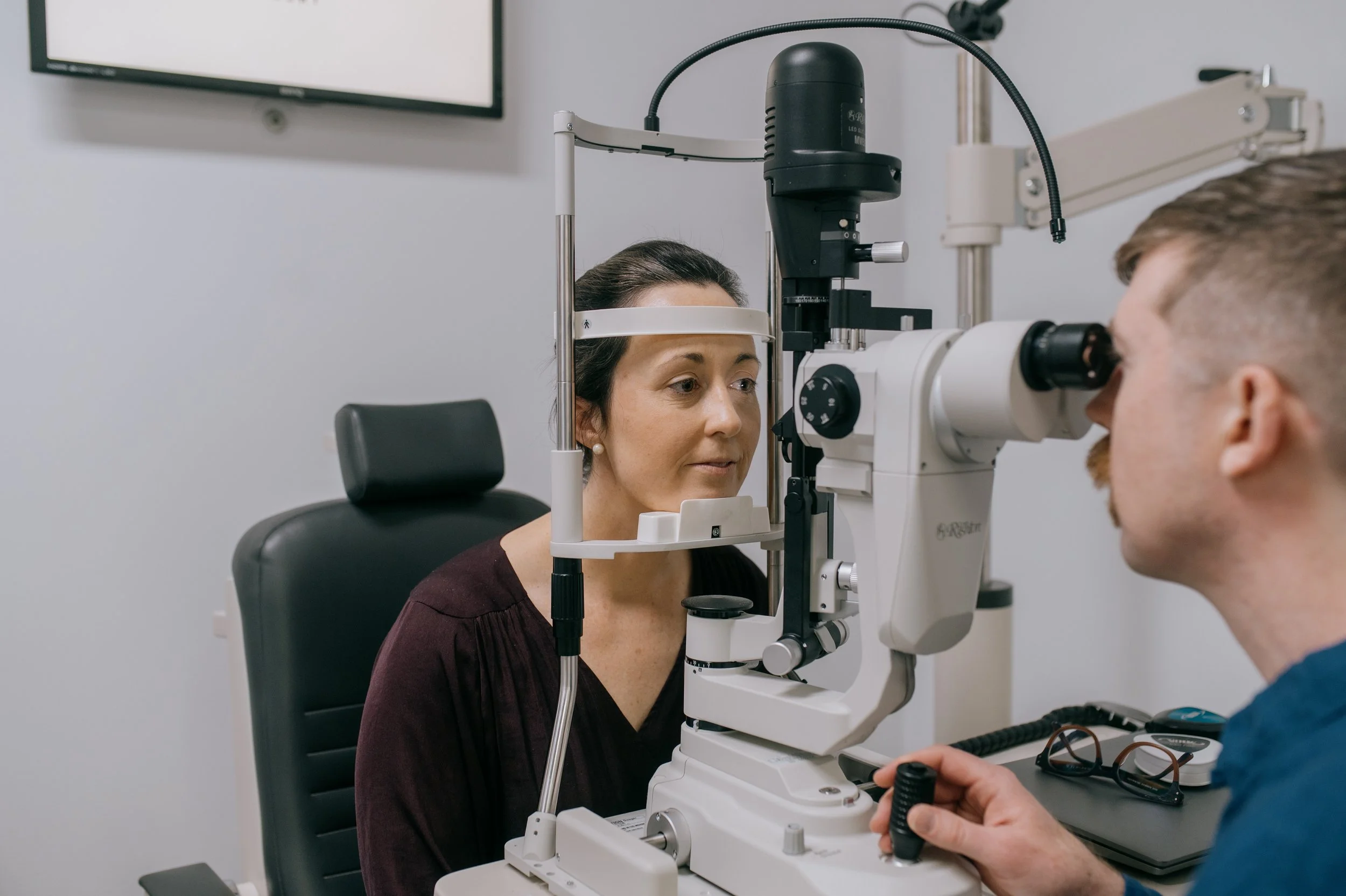
Ortho-K
Wake Up Frame Free - Unlock clear vision overnight!
Orthokeratology is a non-surgical method of vision correction that involves wearing specially designed gas permeable contact lenses overnight. These lenses gently reshape the cornea while you sleep, correcting refractive errors, such as but not limited to myopia.i
The benefit?
Clear unaided vision throughout the day without the need for refractive surgery, glasses, or daytime contacts.
How does orthokeratology work?
The unique curved design of Ortho-K lenses generates pressure in the thin layer of tears under the contact lens. By applying gentle pressure to specific areas of the cornea, Ortho-K lenses alter its curvature, effectively changing the way light rays are refracted onto the retina.ii It’s this gentle tear pressure, rather than the lens itself, that is responsible for the subtle change in corneal shape.
Is orthokeratology safe?
Worn while you sleep, orthokeratology lenses are made from a highly oxygen permeable (breathable) material enabling treatment to proceed relatively safely during sleep without the problems caused by a lack of oxygen to the cornea.
How often are Ortho-K lenses worn?
The cornea is highly elastic and will return to its original shape if orthokeratology lenses are not worn on a regular basis. For this reason, Ortho-K lenses are generally worn several times per week, or nightly, to maintain the re-shaping effect once the desired cornea shape has been achieved.
Who is eligible for orthokeratology?
Orthokeratology is most commonly used for people who are short-sighted (myopic). It is ideal for sportspeople, swimmers or those who work in dusty or dirty environments.
Scott and Kate are experienced in Ortho-K and will assess your eligibility based on your prescription and general eye health.
Find out your suitability for Ortho-K lenses by booking an appointment at Fitzpatrick Family Optometrists Maroochydore today!
ihttps://www.ncbi.nlm.nih.gov/pmc/articles/PMC6095568/
ii https://www.contactlensjournal.com/article/S1367-0484(21)00017-5/abstract
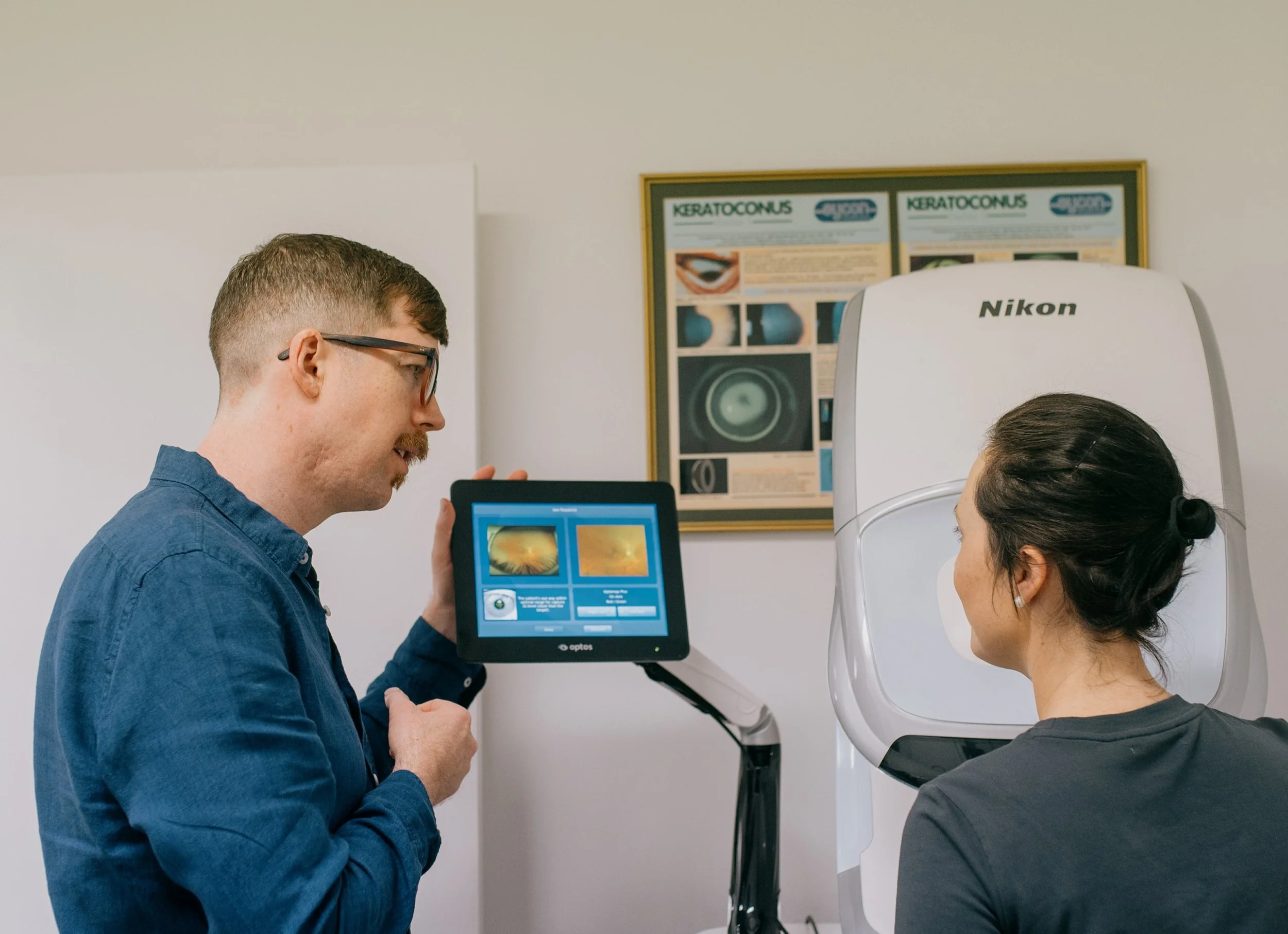
Dry Eyes
Say Goodbye to Dry Eye!
Understanding Dry Eye Causes and Symptoms
Dry eye is a common and often chronic problem affecting over 4 million Australians. In January 2020, Optometry Australia reported 77% of Australians have suffered dry eye, yet only 26% have seen an optometrist about the treatment options available.
What is Dry Eye?
Dry Eye occurs when your tears aren’t able to provide adequate lubrication for your eyes, due to a reduction in the quality or quantity of tears. This tear film comprises three layers that work together to keep your eyes moist and protected. If anything upsets the tear film, it can become unstable or evaporate and results in dryness and inflammation of the cornea (front of the eye).
How can I manage Dry Eye?
While dry eye can be an ongoing challenge, there are practical steps you can take to alleviate symptoms and enhance eye comfort, and we have listed a handful of these below:
• Hydration is key, as drinking enough water throughout the day supports tear production, helping to alleviate dry eye symptoms.
• Blinking helps to replenish the tear film in your eyes. Make a conscious effort to blink more frequently, especially during prolonged screen time or focused activities.
• Dry indoor environments, particularly during colder months, can exacerbate dry eye symptoms. Adding a humidifier to your living or working space helps maintain optimal humidity levels, preventing excessive tear evaporation.
• Shield your eyes from harmful UV rays and windy conditions by wearing sunglasses outdoors. Strong weather conditions can contribute to dryness and irritation, so proper eye protection is essential.
• Over-the-counter artificial tear drops may provide temporary relief by lubricating the eyes.
An optometrist is the best person to diagnose dry eye. We will conduct tests that investigate tear production and tear evaporation, and examine the integrity of your tear film, and identify the best solution.
If dry eye is causing you significant or prolonged discomfort, book a comprehensive eye exam with Scott or Kate at Fitzpatrick Family Optometrists Maroochydore today.
1https://www.optometry.org.au/wp-content/uploads/GVFL/Brochure_PDFs/Dry-Eye-2018-A4-single-page-final.pdf
2https://goodvisionforlife.com.au/vision-problems/dry-eye/
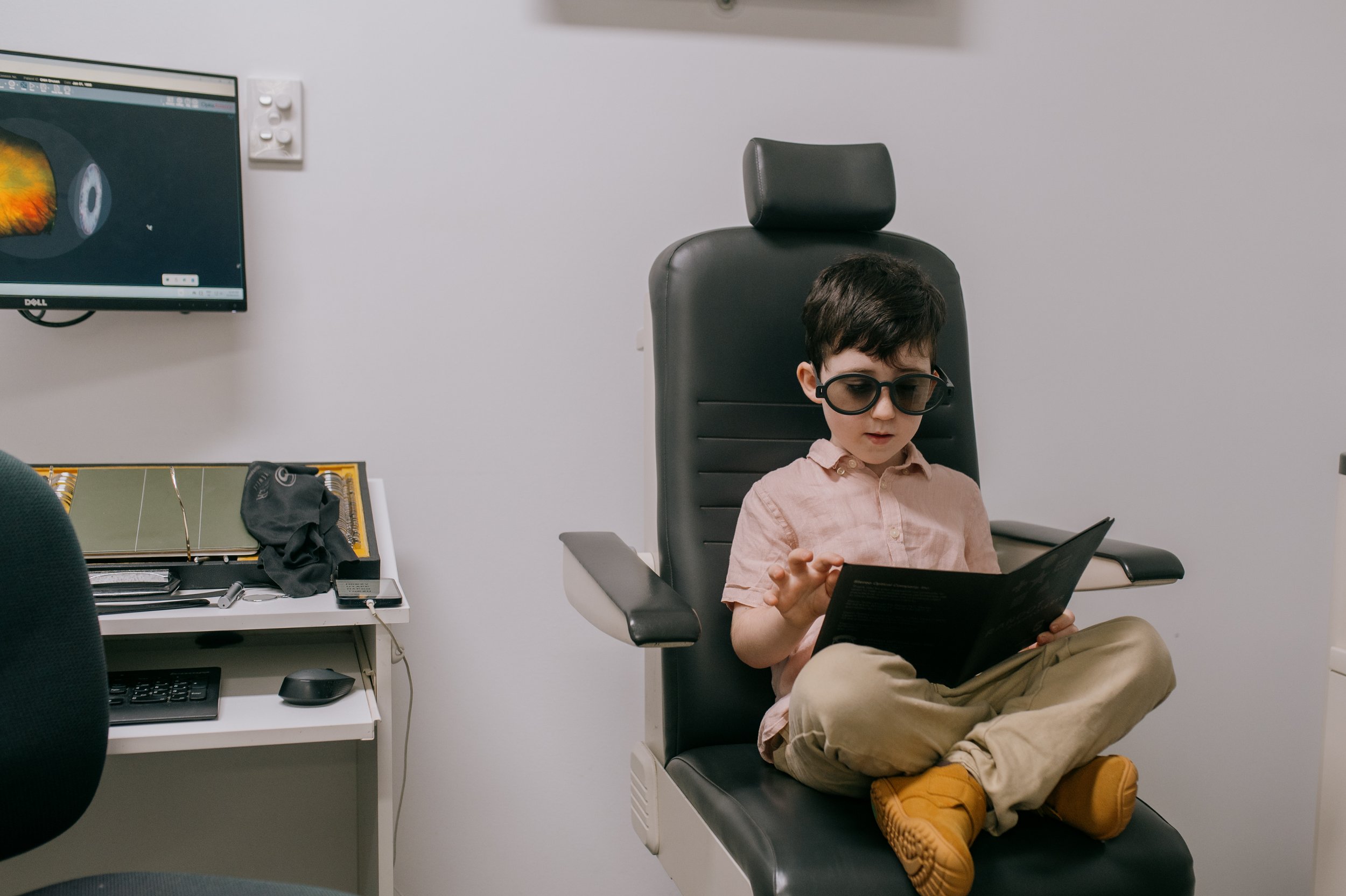
Children’s Eye Test
The importance of back-to-school eye exams - Is your pupil school ready?
As the back-to-school season approaches, parents are busy with shopping for uniforms, backpacks, and school supplies. But amid all the preparation, one critical aspect often goes overlooked - your child's eye health. Is your star pupils' vision ready for the new school year? Scheduling a comprehensive eye exam could make all the difference in their academic and social success.
Why eye exams matter for young children
Vision plays a major role in learning. From reading books and writing notes to using digital devices, clear vision is essential for students to keep up with classroom activities. In fact, it's estimated that up to 80% of a child's learning happens through visual processing. Yet, many children may struggle with undiagnosed vision issues that could hinder their progress.
Children may not always realise or be able to articulate that they have vision problems. Regular eye exams allow us to detect any issues early, such as myopia or amblyopia, before they negatively impact learning.
Common vision problems in children
Some of the most common vision issues in children include:
" Myopia (nearsightedness): This condition is increasingly prevalent, especially with more screen time and less outdoor play. Myopia can affect a child's ability to see distant objects, making it difficult to follow lessons on the board.
" Strabismus (crossed eyes): Involves issues with the muscles or nerves that help the eyes focus. May affect one or both eyes.
" Amblyopia (lazy eye): Often developing in early childhood, this condition involves one eye being weaker than the other. How well treatment works is limited after the age of 9 years old, so early diagnosis and treatment is very important.
Signs your child may need an eye exam
Parents might not realise their child is struggling with vision problems, as children often adapt without understanding that something is wrong. Here are a few signs to watch for:
" Squinting or closing one eye to see better.
" Sitting too close to the TV or holding books too close.
" Complaints of headaches, tired eyes, or double vision.
" Difficulty concentrating or following along in class.
If you notice any of these signs, it's time to book an eye exam. Even if there are no noticeable issues, routine checks are vital.
The benefits of routine eye exams
A comprehensive eye exam ensures that your child's vision is supporting their learning, not hindering it. Clear eyesight leads to better focus, improved reading skills, and enhanced performance across academic and extracurricular activities.
Good vision is also crucial for social development. Children with untreated vision problems may struggle in sports, games, and other activities, which can affect their self-esteem and ability to connect with peers.
How often should children have eye exams?
While school vision screenings can be helpful, they often miss more subtle problems. According to Optometry Australia (OA) children should have their eyes evaluated by an optometrist at 6 months, then every year until the start of school and then at least every 2 years during their primary school years. If a child has a known vision issue, more frequent visits may be necessary.
Schedule a back-to-school eye exam with Fitzpatrick Family Optometrists Maroochydore today
As optometrists, we can't stress enough the importance of including an eye exam in your back-to-school preparations. Clear vision is crucial for your child's success, both in the classroom and beyond. At Fitzpatrick Family Optometrists, we're here to ensure your child's eyes are ready for the new school year.
If we detect any vision issues, we'll discuss the best treatment options, which may include glasses, contact lenses, vision therapy, or myopia management, depending on your child's needs. Early detection is key, as many eye conditions are easier to treat while the eyes are still developing.
Make your child's eye health a priority this year. Book their comprehensive eye exam at Fitzpatrick Family Optometrists today to give them the best possible start to the school year.